
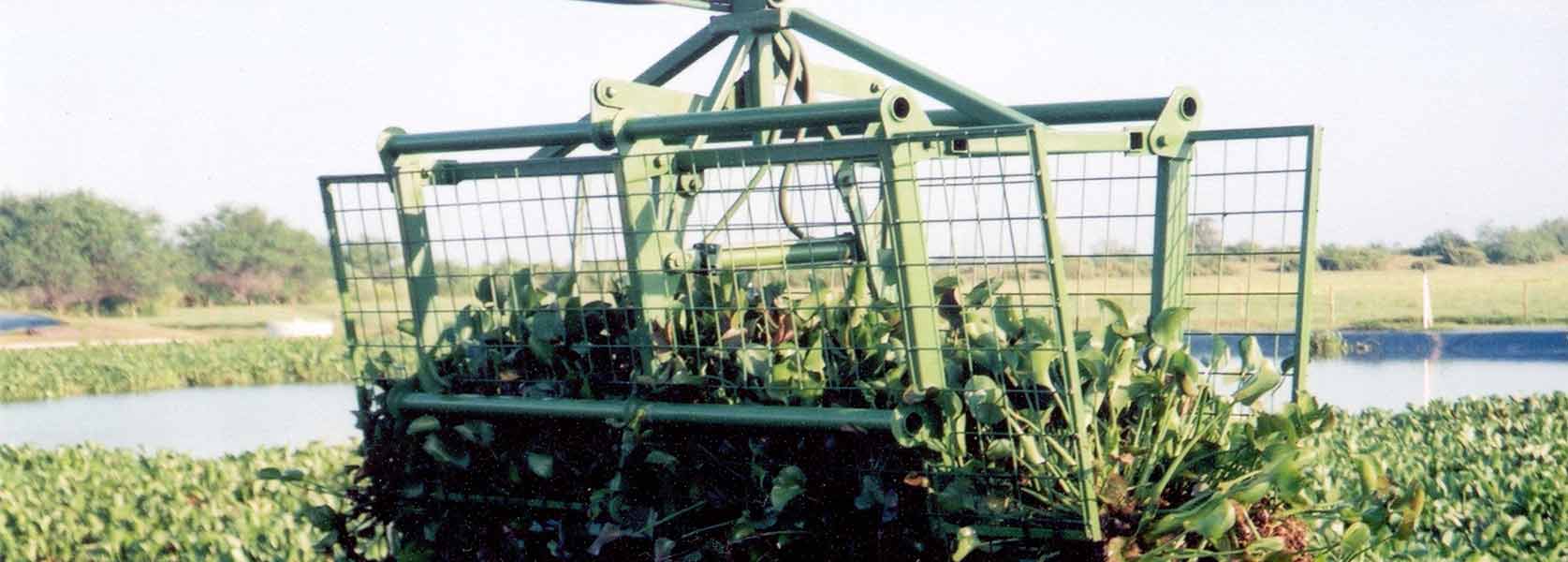
Water Hyacinth Scrubber systems are designed around active plant growth, routine harvesting, and managed biomass recovery. This distinguishes WHS from unmanaged water hyacinth growth, where excessive plant accumulation can create operational, ecological, and water quality problems.
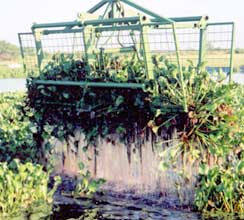
In a managed WHS system, water hyacinths are cultivated under controlled treatment conditions and harvested to remove accumulated plant biomass from the system. This harvest-and-regrowth cycle helps maintain plant productivity while physically exporting captured nutrients, suspended solids, and other constituents associated with the plant root zone and biomass.
HydroMentia’s WHS experience includes system layout, harvesting strategy, biomass handling, and operational evaluation. Properly managed harvesting is central to long-term performance because it prevents overgrowth, maintains active plant uptake, and provides a practical mechanism for nutrient and biomass recovery.
Although HydroMentia is no longer positioning WHS as a patented or exclusive technology, the company’s experience with managed aquatic plant systems can support owners, engineers, and operators interested in applying WHS concepts where climate, water quality, land availability, and biomass management conditions are suitable.