
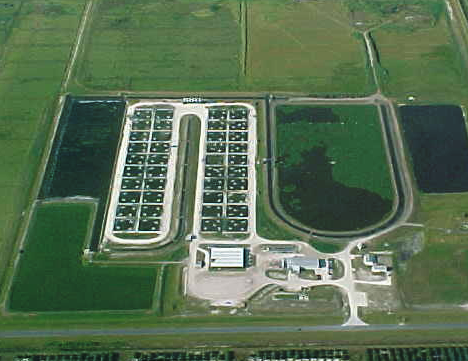
Harmony Creek was HydroMentia’s full-scale closed recirculating aquaculture facility in Okeechobee County, Florida. The facility was designed to demonstrate that an integrated aquatic plant treatment system, combining water hyacinths and Algal Turf Scrubber® treatment, could maintain production water quality at commercial aquaculture scale while operating without routine discharge to surface waters.
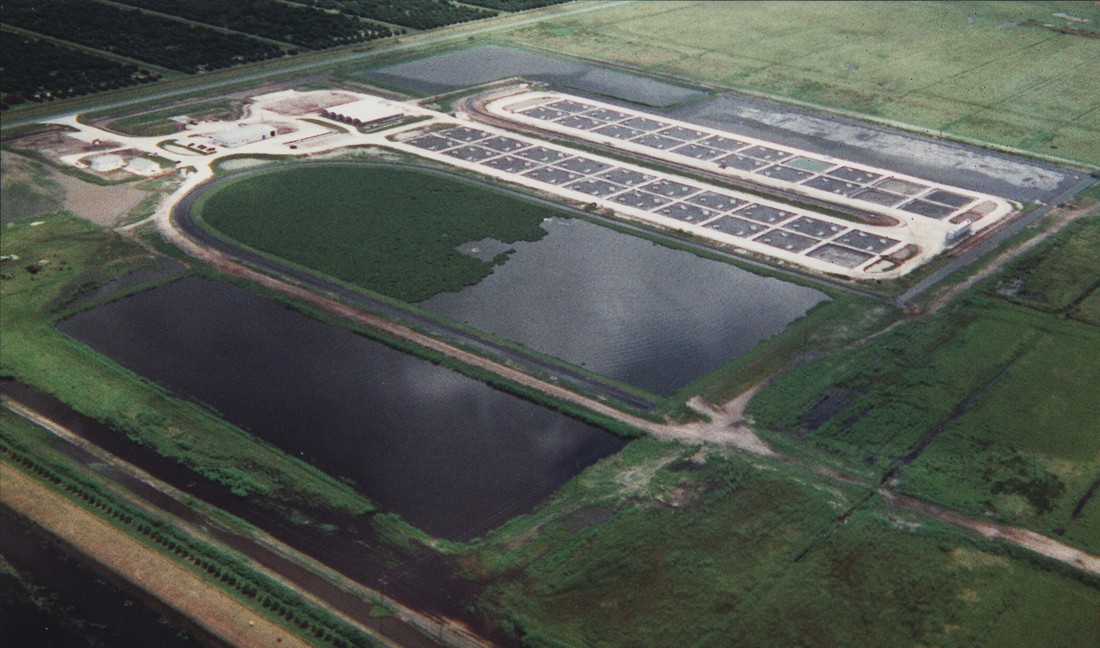
Unlike most HydroMentia facility pages, Harmony Creek was not a short-term water-quality pilot or a client-funded treatment demonstration. It was a commercial fish-production facility. Its primary operating objective was to maintain water quality suitable for intensive fish growth, feeding, survival, and harvest in a closed recirculating system. In that role, the facility provided HydroMentia’s first large-scale proof that aquatic plant treatment and ATS operation could be integrated into a high-flow, high-nutrient, continuously operated production system.
Project Summary
Facility: Harmony Creek Seafood Production Facility
Location: Okeechobee County, Florida
Technology: Integrated Water Hyacinth System followed by Algal Turf Scrubber® treatment
System Water Volume: 40 million gallons
Scale: WHS: 11.5 acres; ATS: 240 feet long by 840 feet wide; approximately 4.5 acres
Floway Slope: 1.0%
Design Inflow: 30 MGD
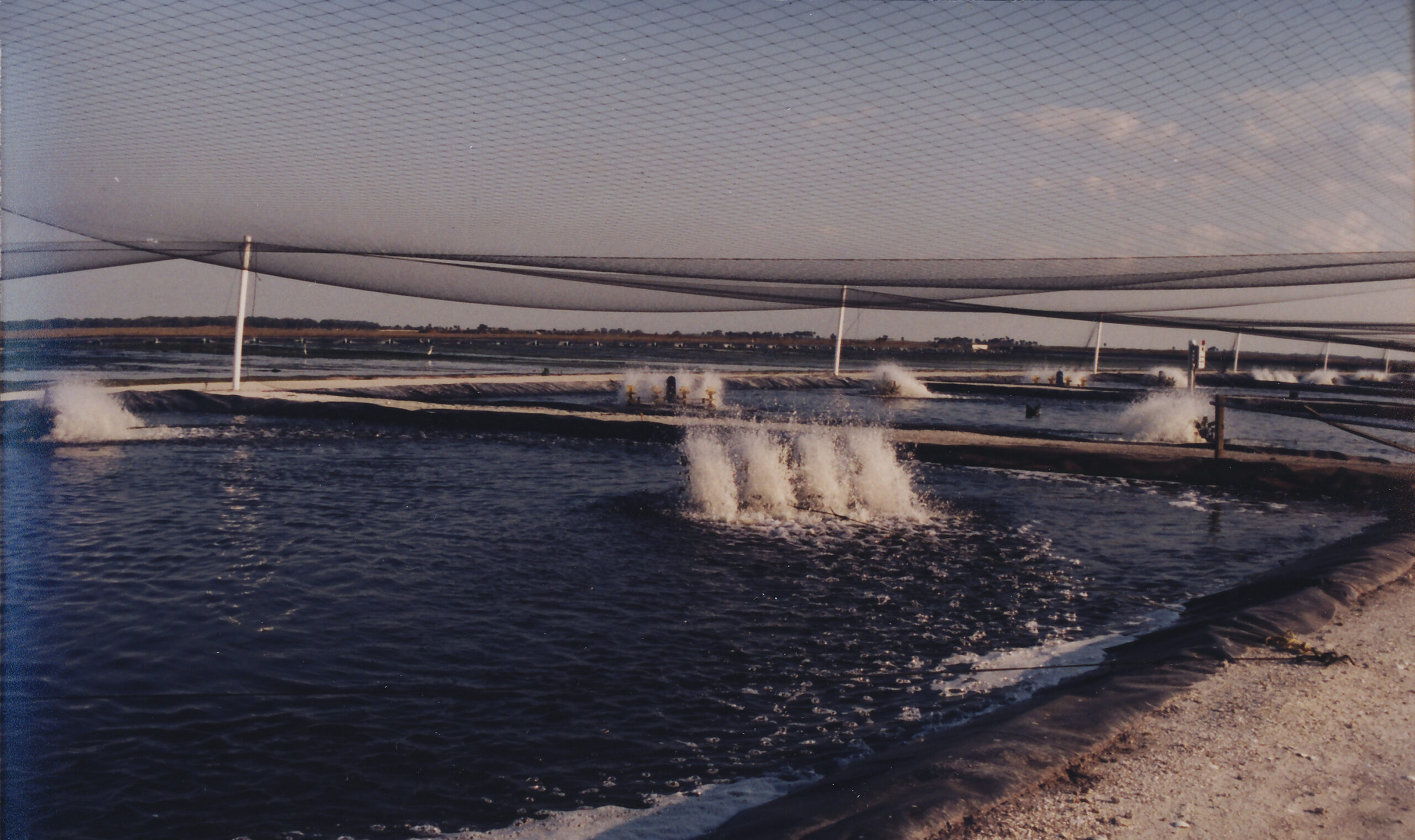
Fish Production System: Forty lined production ponds, with nursery and supporting production systems
Target Production: Approximately 1.5 million pounds per year of hybrid striped bass
Status: Commercial aquaculture operation completed
Operating Period: Constructed in 1998; commercial production began in 1999–2000
Source Water: Closed recirculating aquaculture water
Operating Context: Zero-discharge aquaculture; fish-production water-quality maintenance; nutrient recovery; proof-of-scale aquatic plant and ATS operation
Application: Commercial aquaculture water treatment, nutrient recovery through aquatic plant biomass and fish harvest, operational scale-up of water hyacinth / ATS treatment systems, and design support for later nutrient-reduction facilities
Operating Context
HydroMentia developed Harmony Creek to demonstrate aquatic plant based water treatment at full operational scale. The facility was located in the Lake Okeechobee region, where nutrient management, agricultural runoff, and surface-water restoration were already major environmental concerns. HydroMentia’s long-term objective was to apply aquatic plant and ATS treatment systems to nutrient-polluted waters, but the company first built a commercial recirculating aquaculture facility to prove that the technology could be operated continuously at large scale.
The facility was designed around three interacting biological production systems: fish production ponds, a water hyacinth treatment system, and an ATS treatment system. Fish production generated the nutrient load through feed input and fish metabolism. The water hyacinth system provided front-end nutrient uptake, organic-matter processing, flow equalization, and biological conditioning. The ATS provided additional treatment through attached-algae growth, oxygen production, carbon dioxide uptake, and harvestable algal biomass.
The facility was operated as a closed recirculating system. Water was continuously circulated through the fish production ponds and aquatic plant treatment systems, with makeup water used primarily to replace evaporation and other system losses. This zero-discharge operating concept was central to the facility’s environmental purpose: nutrients introduced through fish feed were retained, transformed, harvested, or incorporated into fish and plant biomass rather than discharged to surface waters.
Commercial Production Context
Harmony Creek initially evaluated both tilapia and hybrid striped bass. Tilapia were attractive because of fast growth and established live-fish markets, but the species was vulnerable to cold-weather events. After operational experience, the facility shifted toward hybrid striped bass, which provided a higher-value product and became the primary commercial focus.
The aquaculture system was developed with outside expertise and careful review of large-scale recirculating aquaculture practices. HydroMentia’s objective, however, was not simply to become a large aquaculture company. The facility was intended to prove that the integrated water-treatment platform could support commercial-scale biological production under demanding operating conditions.
Hybrid striped bass production introduced disease-management challenges typical of intensive aquaculture. After streptococcus became a production issue, HydroMentia’s investors and management elected to redirect staff and capital toward the company’s broader long-term goal: applying aquatic plant and ATS treatment systems to nutrient-polluted waters at regional scale. That transition coincided with HydroMentia’s movement into major water-treatment demonstrations, including the S-154 project for the South Florida Water Management District.
Integrated Treatment System
The Harmony Creek treatment system combined two aquatic plant technologies with complementary functions.
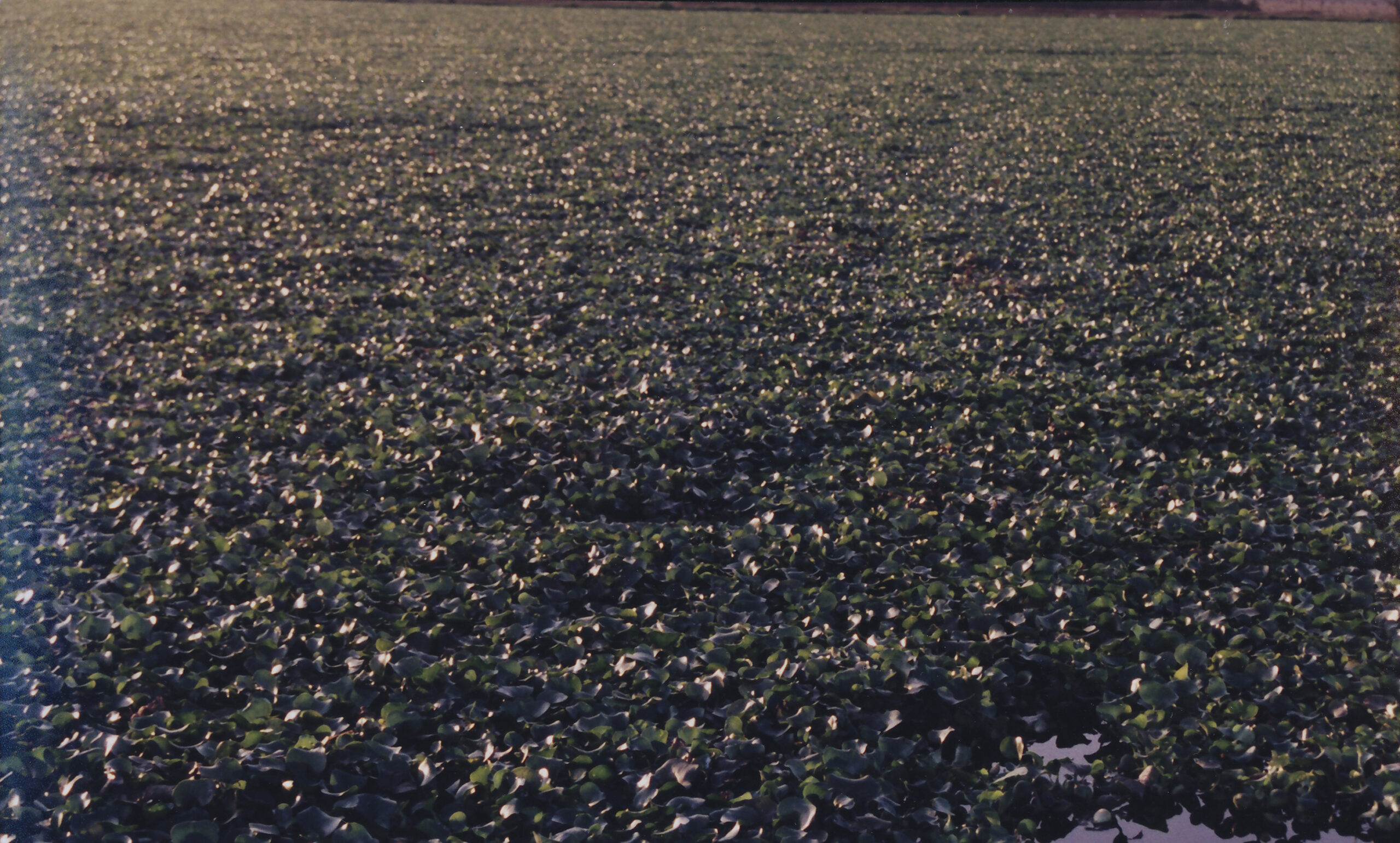
The water hyacinth system served as the front-end treatment unit. Water hyacinths provided nutrient uptake, biological surface area, organic-matter processing, and hydraulic buffering. The hyacinth system also helped condition the water before ATS treatment, including effects on carbon dioxide, dissolved oxygen, and biological stability.
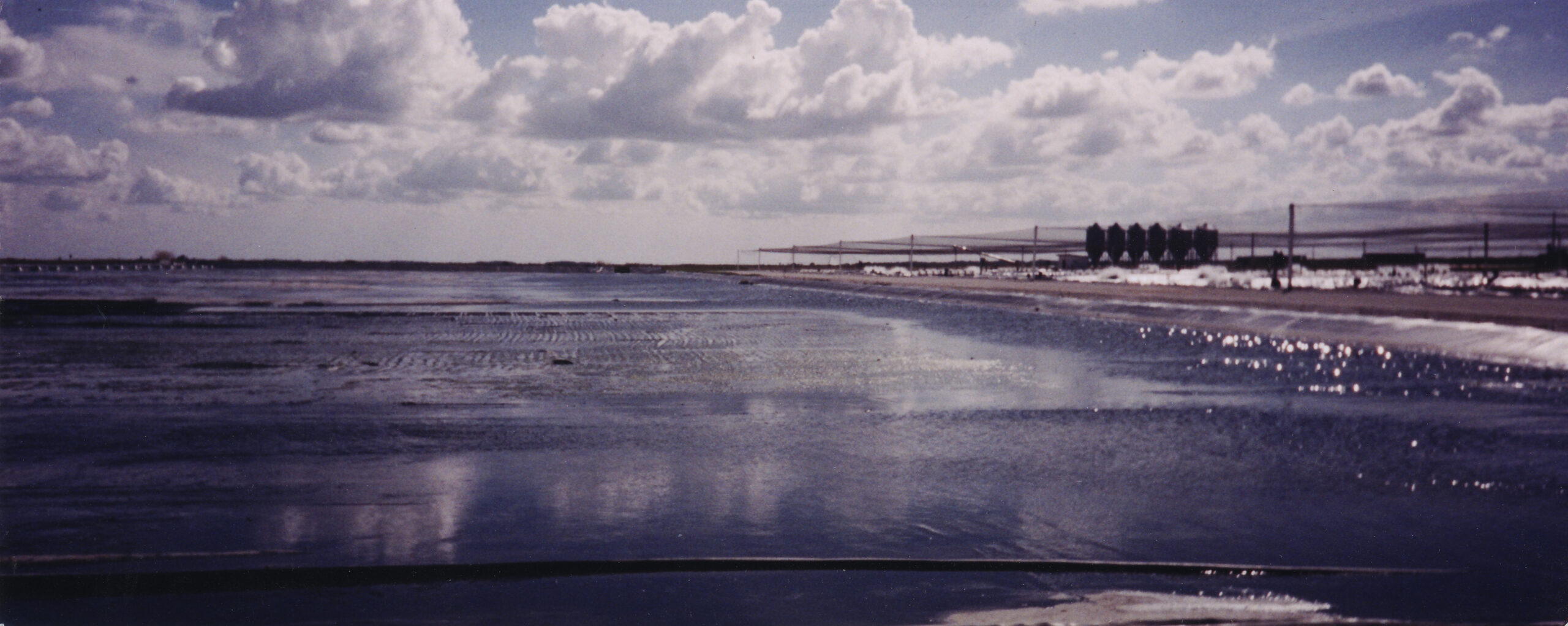
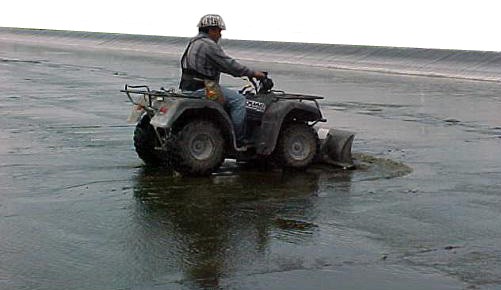
The ATS served as the downstream attached-algae treatment unit. Water flowed across shallow sloped floways supporting dense algal turf growth. Routine harvesting of the algal crop removed nutrients from the recirculating water and prevented the algal community from shifting toward older, less productive growth forms. The ATS also contributed oxygen and helped manage water chemistry in the recirculating system.
Together, the water hyacinth and ATS systems provided redundancy and operational flexibility. That integration was central to the Harmony Creek concept. The facility was not simply a fish farm with a treatment component; it was a commercial-scale demonstration of an integrated biological water-treatment and production system.
Nutrient-Balance Assessment
Harmony Creek was operated as a commercial fish-production facility rather than as a formal water-quality demonstration. Water-quality monitoring was limited and was used primarily for operational management. Because the system operated at very high recycle rates, with variable internal flows and limited monthly sampling, direct influent-effluent water-quality calculations were not the most reliable way to characterize performance.
HydroMentia therefore prepared a nutrient-balance assessment using feed inputs, fish standing crop, fish harvest and mortality, water-column storage, groundwater, rainfall, and estimated aquatic plant biomass removal. This approach better reflected the closed recirculating nature of the system.
For the March through September 2000 assessment period, the integrated aquatic plant treatment system was estimated to remove approximately 66,415 pounds of nitrogen and 10,561 pounds of phosphorus over 214 days. Across the 15.8-acre water hyacinth / ATS treatment system, this corresponded to average areal removal rates of approximately 19.6 lb N/acre-day and 3.1 lb P/acre-day.
These values should be interpreted as an operational nutrient-balance estimate, not as a conventional influent-effluent performance dataset. The results nevertheless provide important scale context. Harmony Creek operated with nutrient concentrations and feed-driven loading far higher than most later HydroMentia surface-water ATS projects, while maintaining fish-production water quality in a zero-discharge recirculating system.
Water-Quality Operating Context
The facility required active operational management. As with other intensive recirculating aquaculture systems, water temperature, dissolved oxygen, pH, ammonia, nitrite, nitrate, feeding rates, standing crop, and fish health all affected daily operations. During periods of high algal productivity and elevated summer temperatures, pH and ammonia dynamics required particular attention.
These operating conditions were part of the value of the facility. Harmony Creek provided HydroMentia with practical full-scale experience in water movement, aquatic plant cultivation, ATS operation, biomass harvesting, nutrient recovery, fish-production water quality, and the realities of managing a large biological treatment system continuously rather than intermittently.
The facility also demonstrated the difference between operating a water-treatment technology and operating an aquaculture business. The treatment system maintained water quality for commercial fish production, but intensive hybrid striped bass production brought disease-management and staffing demands that were separate from the water-treatment mission.
Proof-of-Scale Significance
Harmony Creek was one of the most important facilities in HydroMentia’s history because it proved that ATS and water hyacinth treatment could be built, operated, harvested, and managed at a scale far beyond laboratory or pilot testing.
The facility demonstrated several practical capabilities that later informed HydroMentia’s water-treatment work:
Large-scale recirculation of approximately 30 MGD through an integrated biological treatment system.
Operation of a 4.5-acre ATS as part of a continuously managed production facility.
Integration of ATS treatment with a large water hyacinth cultivation system.
Routine aquatic plant biomass harvesting and handling at operational scale.
Maintenance of production water quality under high feed input and high nutrient loading.
Zero-discharge operation in a region where nutrient pollution and Lake Okeechobee restoration were major public concerns.
The experience gained at Harmony Creek helped HydroMentia transition from technology development to public water-resource applications. Lessons from the facility influenced subsequent projects, including S-154, Taylor Creek, STA-1W, and later full-scale surface-water treatment facilities.
Strategic Transition to Water Treatment
Harmony Creek fulfilled its strategic purpose as a proof-of-scale facility. It showed that HydroMentia could design, build, operate, harvest, and manage aquatic plant treatment systems at a commercial scale. It also showed that the company’s core opportunity was not necessarily to become a large fish producer, but to apply the treatment platform to nutrient-polluted waters.
After the facility had demonstrated full-scale operation, and as intensive hybrid striped bass production required increasing disease-management attention, HydroMentia redirected its focus toward water treatment. The company’s investors and management elected to concentrate staff and capital on the larger long-term objective: developing aquatic plant and ATS systems for regional nutrient reduction.
That transition led directly into HydroMentia’s major Lake Okeechobee Watershed work and later ATS demonstrations. In that sense, Harmony Creek served as the operational bridge between early technology development and HydroMentia’s subsequent full-scale water-resource management applications.
Photographs
Reports and Publications
Historical summary: HydroMentia / Harmony Creek Seafood Production Facility historical materials
Technical summary: Estimates of Phosphorus and Nitrogen Treatment Efficiency — HydroMentia’s Recirculating Aquaculture System, Phase 1A, Okeechobee, Florida
Related Projects
Related HydroMentia ATS facilities and demonstrations include S-154 WHS-ATS, S-154 ATS, Egret Marsh ATS, Osprey Marsh ATS, Taylor Creek ATS, STA-1W ATS, and other full-scale and pilot-scale systems.