
The Taylor Creek Algal Turf Scrubber® (ATS) Nutrient Recovery Facility was designed and constructed for the South Florida Water Management District as a full-scale treatment system to reduce nutrient loads from Taylor Creek, one of the major tributary watersheds to Lake Okeechobee. The facility was located in Okeechobee County, Florida, within the Taylor Creek–Nubbin Slough basin, north of Lake Okeechobee.
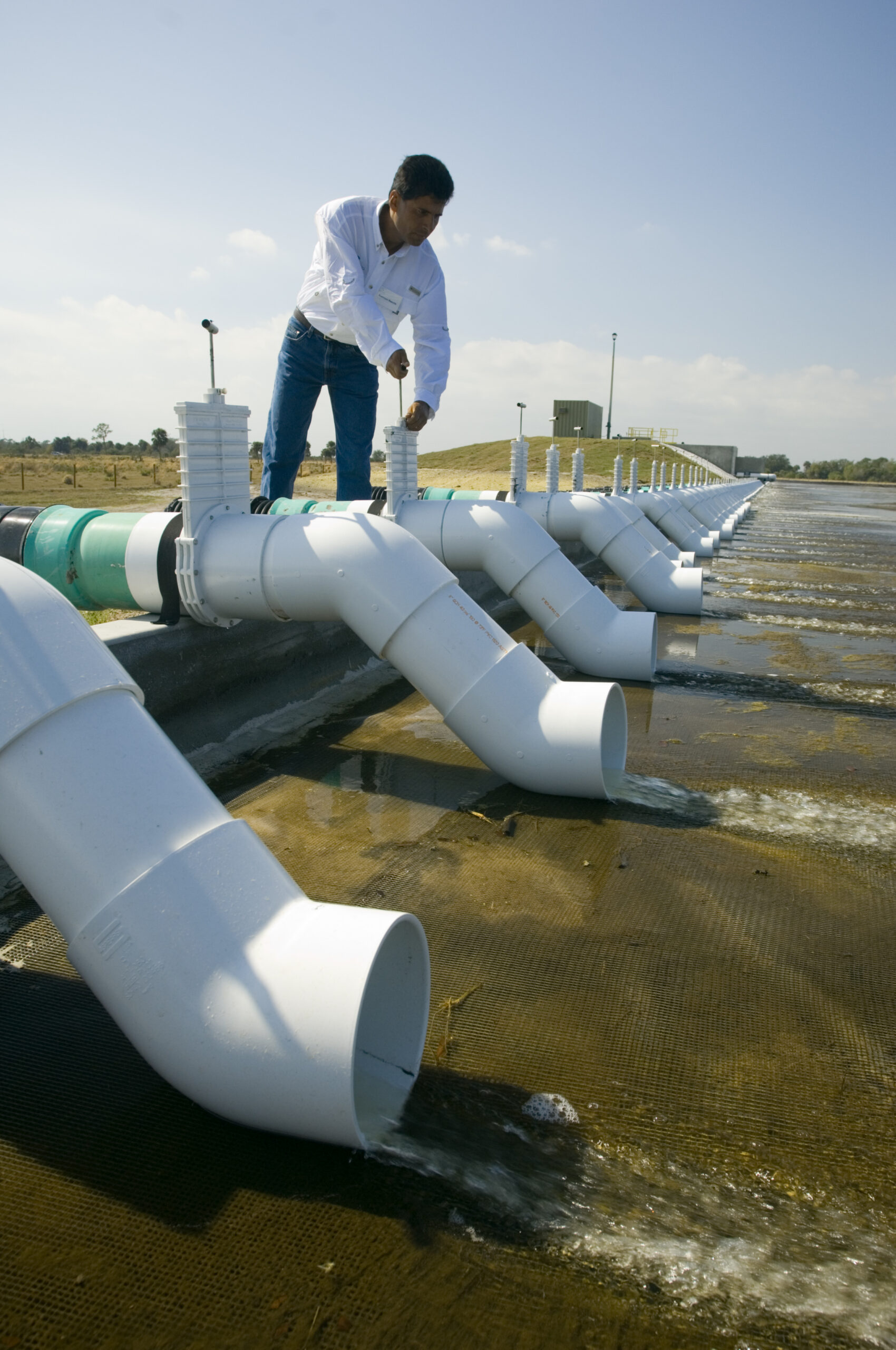
The Taylor Creek facility followed successful ATS pilot testing in the adjacent S-154 basin, where HydroMentia had demonstrated high phosphorus areal removal rates under Lake Okeechobee watershed conditions. Because Taylor Creek and the S-154 basin appeared similar in land use and water-quality characteristics, the Taylor Creek project proceeded directly to full-scale design and construction without a separate Taylor Creek source-water pilot.
Project Summary
Facility: Taylor Creek Algal Turf Scrubber® Nutrient Recovery Facility
Location: Okeechobee County, Florida
Technology: Algal Turf Scrubber® / attached-algae floway
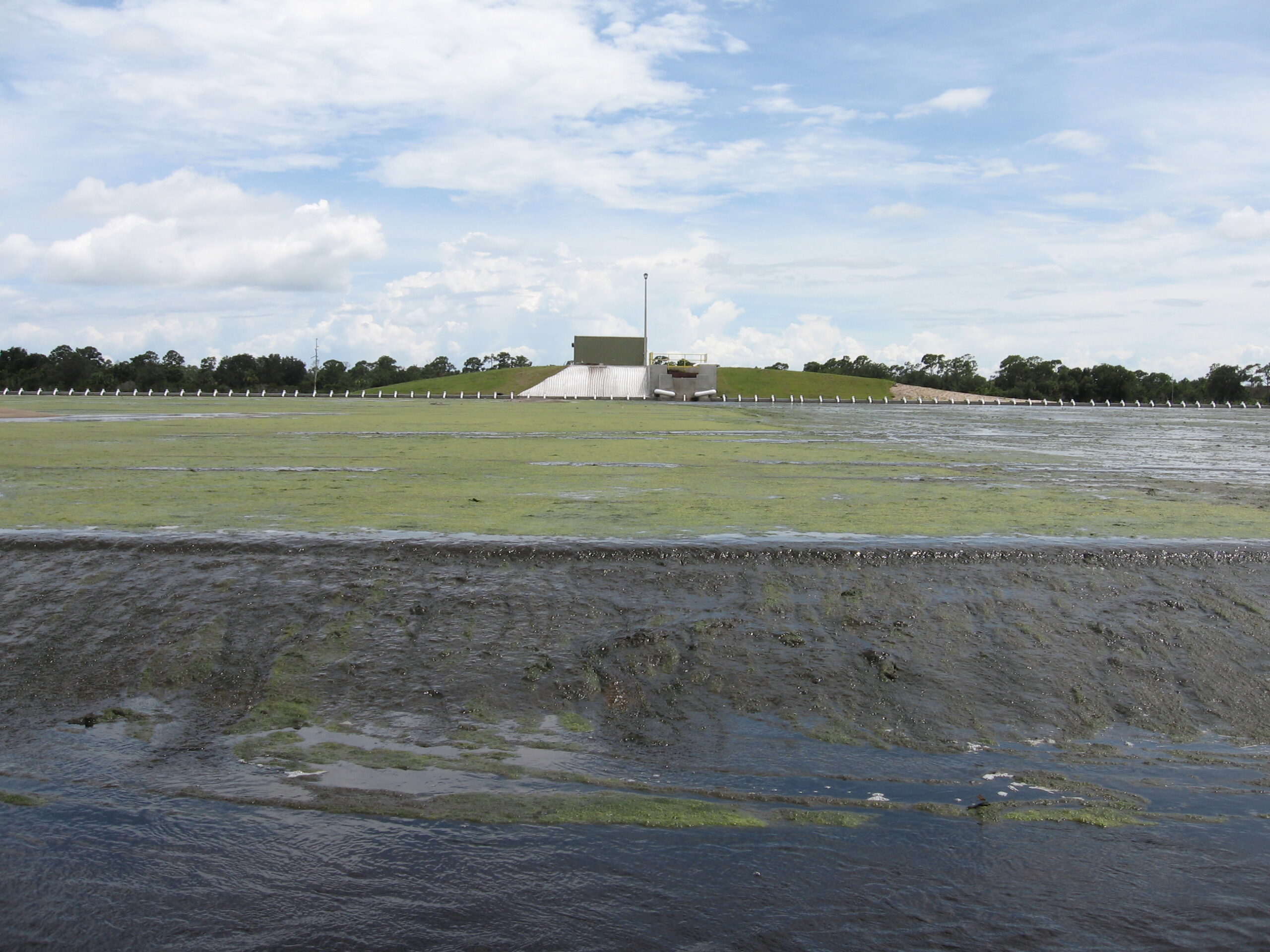
Scale: 300-foot-long by 521-foot-wide floway; approximately 156,300 ft² treatment area
Floway Slope: 0.5%
Design Inflow: 15 MGD
Influent TN: 1.75 mg/L during the January 22, 2007 to January 18, 2010 monitoring period
Influent TP: 367 µg/L during the January 22, 2007 to January 18, 2010 monitoring period
Status: Full-scale facility operated and evaluated; performance investigation completed
Operating Period: 2007–2010
Source Water: Taylor Creek
Operating Context: Lake Okeechobee watershed; Taylor Creek–Nubbin Slough basin; nutrient-load reduction; Lake Okeechobee total phosphorus TMDL
Application: Total phosphorus reduction, total nitrogen reduction, algal biomass recovery, full-scale ATS performance evaluation, and investigation of source-water limitations
Owner / Sponsor: South Florida Water Management District
HydroMentia Role: Facility design, construction, operation, monitoring, data evaluation, performance investigation, toxicity investigation, and final reporting
Operating Context
The Taylor Creek project was developed during a period of major state and regional focus on the Lake Okeechobee Total Maximum Daily Load and the need to reduce phosphorus loads to the lake. The Taylor Creek watershed was recognized as one of the most significant tributary contributors of excess phosphorus and nitrogen to Lake Okeechobee.
HydroMentia’s earlier S-154 pilot work had demonstrated that ATS treatment could remove phosphorus at high areal removal rates under conditions present in a nearby agricultural watershed. Based on those results, and because the Taylor Creek basin is adjacent to the S-154 basin, Taylor Creek was selected for full-scale ATS implementation.
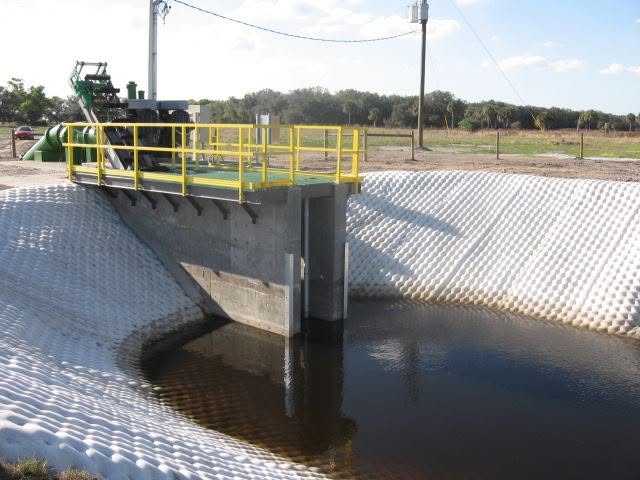
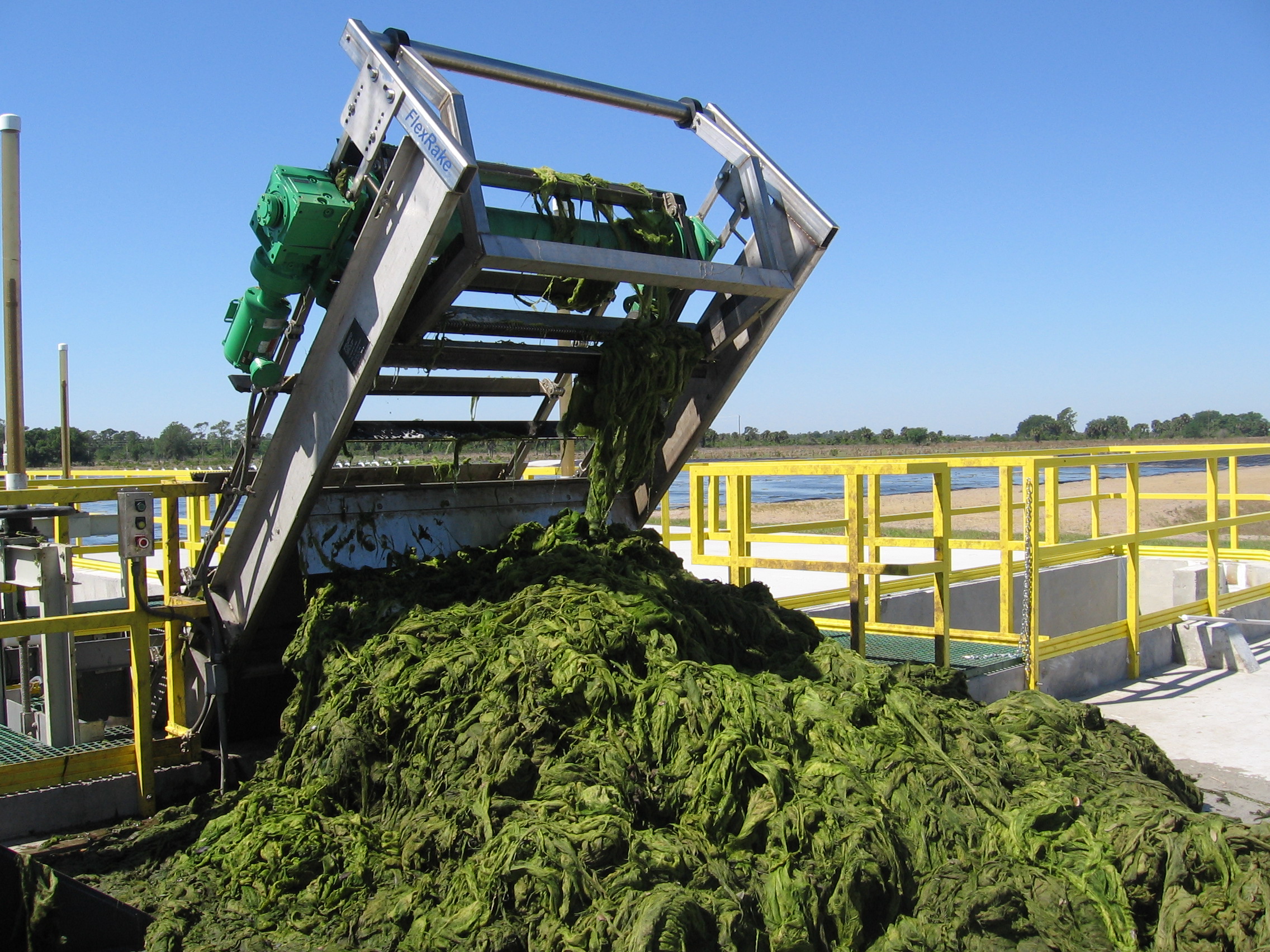
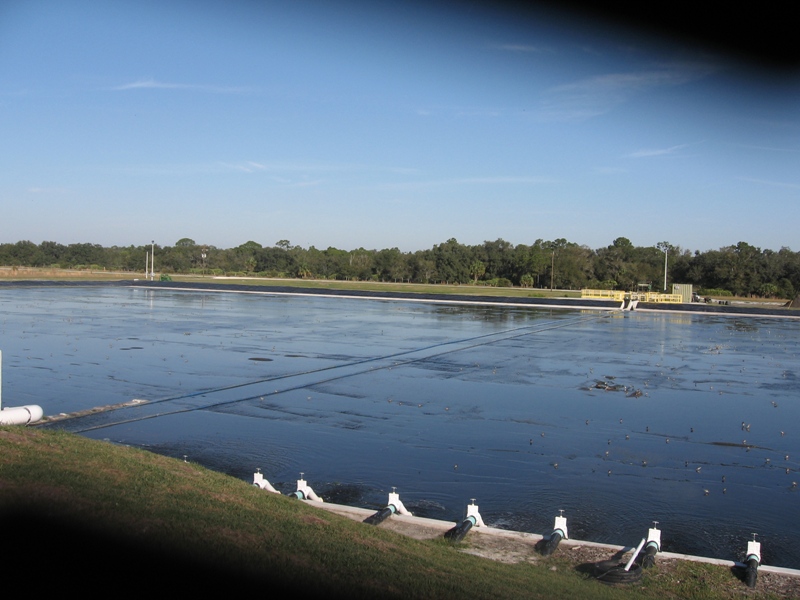
The facility included a pump station on Taylor Creek, a broad pulsed-flow distribution system, a shallow sloped ATS floway, and downstream collection and biomass recovery infrastructure. Treated water was returned to Taylor Creek downstream of the intake.
Operational Performance and Investigation
The Taylor Creek facility did not perform as projected. During the three-year operating period, nutrient removal and algal biomass recovery were substantially below the Basis of Design projections. This performance was unusual relative to HydroMentia’s broader ATS operating experience and prompted extensive investigation into the causes of underperformance.
The investigation evaluated a broad range of potential explanations, including hydraulic loading rate, slope, surge cycle, grid design, growth-factor limitations, grazing, evapotranspiration, external nutrient sources, analytical error, sampling error, and laboratory error. The report concluded that the primary evidence did not support physical design, operational, or sampling error as the principal explanation for the low performance.
The investigation instead identified intermittent inhibitory or toxic influences in Taylor Creek source water that affected periphyton and algal turf development. Toxicity Identification Evaluation testing, activated-carbon studies, micro-floway testing, geographic sampling, and other analytical investigations indicated that one or more compounds in Taylor Creek water were inhibiting algal attachment, algal turf development, and long-term system performance.
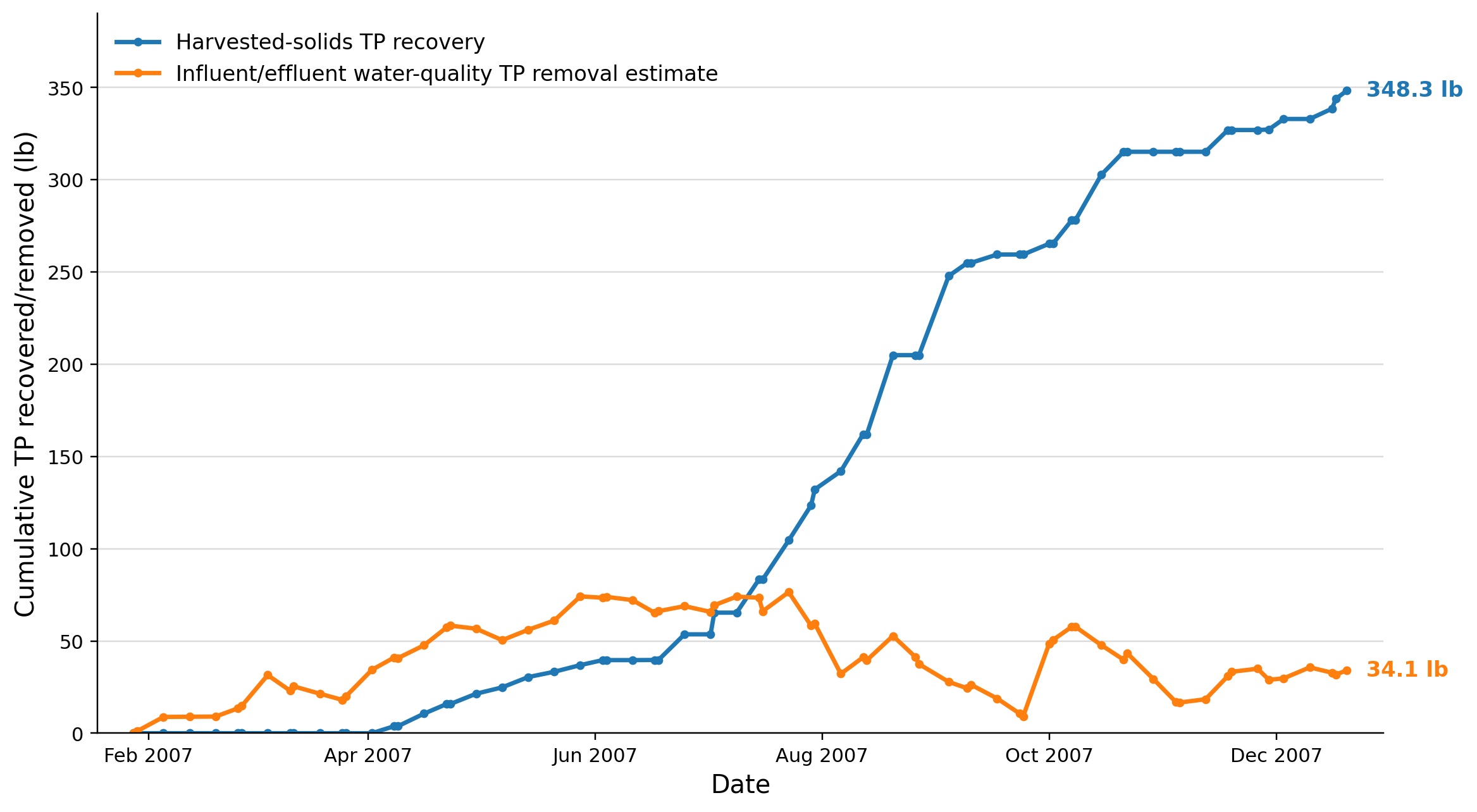
One unresolved technical issue from the Taylor Creek project was the discrepancy between nutrient-removal estimates based on influent/effluent water-quality data and nutrient recovery calculated from harvested biomass. This difference was unusual relative to HydroMentia’s broader ATS operating experience and remains part of the project’s technical record.
Operational Significance
The Taylor Creek ATS facility is significant because it demonstrated the importance of site-specific source-water testing, even when adjacent watersheds appear similar. Taylor Creek and the S-154 basin were geographically close and broadly similar in agricultural land use, yet the Taylor Creek source water produced a very different biological response.
From a technology-development perspective, Taylor Creek became one of the most important diagnostic projects in HydroMentia’s history. The facility showed that full-scale ATS performance depends not only on nutrient concentrations, hydraulic loading, and floway design, but also on whether the source water supports healthy attached-algae development.
The Taylor Creek investigation also demonstrated the value of ATS systems and micro-ATS test units as biological indicators of source-water stress. The project generated important information regarding periphyton inhibition, stormwater runoff effects, possible surfactant/adjuvant-type compounds, activated-carbon response, water hyacinth pretreatment, wetland attenuation, and the need for upstream source identification when periphyton-based treatment systems are affected by inhibitory compounds.
Lessons Learned
The principal lesson from Taylor Creek was that pilot testing on the actual source water is critical when moving from one watershed to another, even within the same regional basin. The success of the S-154 pilot provided a strong technical basis for ATS treatment in the Lake Okeechobee watershed, but Taylor Creek showed that watershed-specific chemical and biological conditions can override expectations based on nutrient concentrations alone.
Taylor Creek also remains important because it is the only ATS system known to have substantially underperformed relative to design projections. Rather than invalidating the ATS process, the project clarified a boundary condition: attached-algae treatment requires source water that allows periphyton attachment, establishment, and sustained growth.
The project’s diagnostic findings helped inform later HydroMentia thinking regarding source-water screening, pilot testing, toxicity evaluation, pretreatment, and the importance of understanding watershed-specific runoff chemistry before full-scale implementation.
Photographs
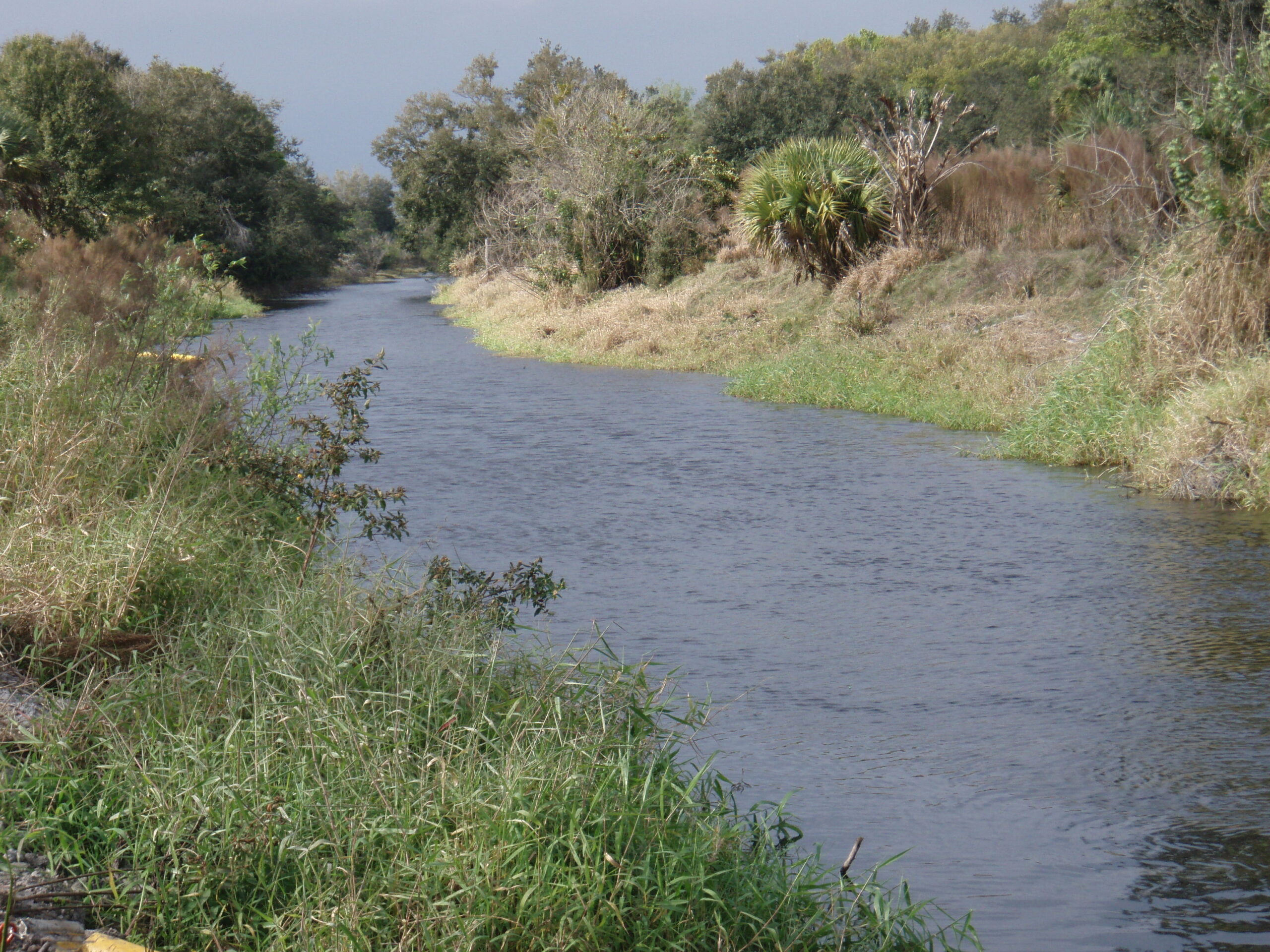
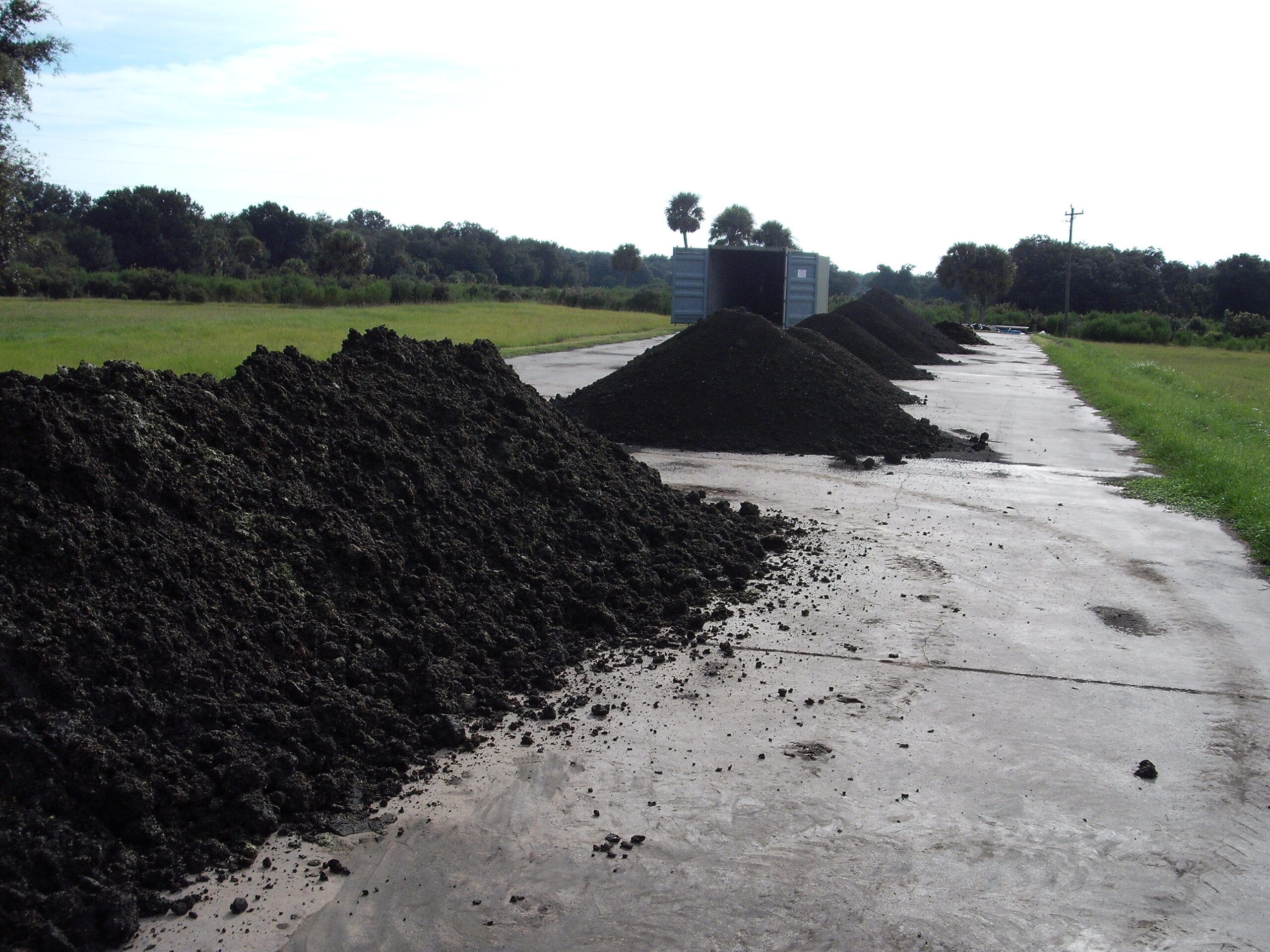
Photographs of the Taylor Creek ATS facility show the full-scale floway, pump station, pulsed-flow distribution system, biomass recovery infrastructure, algal growth conditions, and performance investigation activities. Additional project photographs may be added as available.
View Taylor Creek ATS photo gallery
Additional facility photographs are available in HydroMentia’s Facebook photo archive. Facebook may require visitors to sign in to view the complete gallery.
Reports and Publications
The Taylor Creek ATS facility and performance investigation are documented in HydroMentia’s final report prepared for the South Florida Water Management District.
Technical report: Taylor Creek Algal Turf Scrubber® Nutrient Recovery Facility Performance and Toxicity Investigation Summary Report — January 22, 2007 through January 18, 2010
The report was prepared as formal project technical documentation under an approved Quality Assurance / Quality Control plan and was submitted to the sponsoring agency for technical review, comment, revision, and final acceptance.
Influent and effluent water quality monitoring used automated composite samplers operated on a time-interval basis. Analyses included total nitrogen, total phosphorus, and individual nitrogen and phosphorus species, providing a robust basis for evaluating ATS performance.
Additional reports and publications related to Algal Turf Scrubber® technology and facility-scale applications are available in HydroMentia’s ATS Library.
Related Projects
Related HydroMentia ATS facilities and demonstrations include S-154 ATS, Egret Marsh ATS, Osprey Marsh ATS, PC-South/Osprey Marsh ATS, Santa Fe ATS, Suwannee River Regional ATS Assessment, Falls Lake ATS, NYCDEP Rockaway ATS, Maryland Port Administration Algal Flow-Way, and other full-scale and pilot-scale attached-algae treatment systems.