
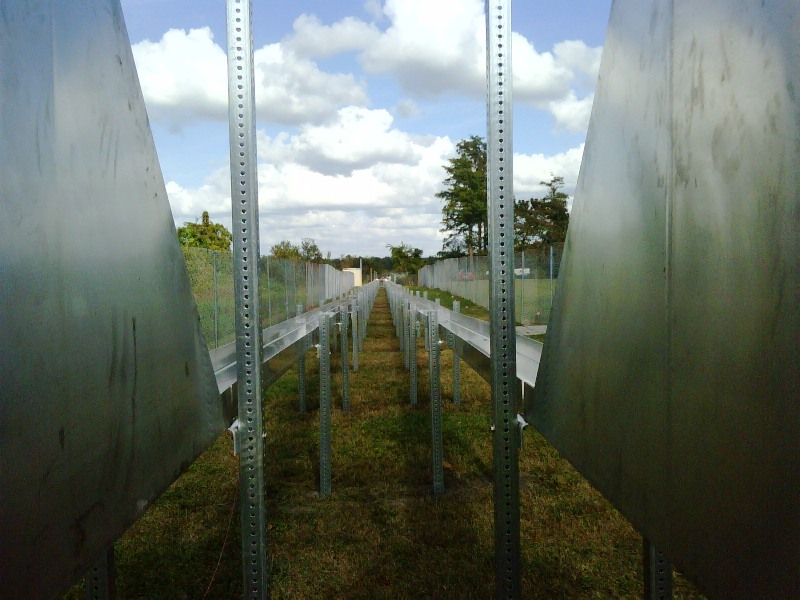
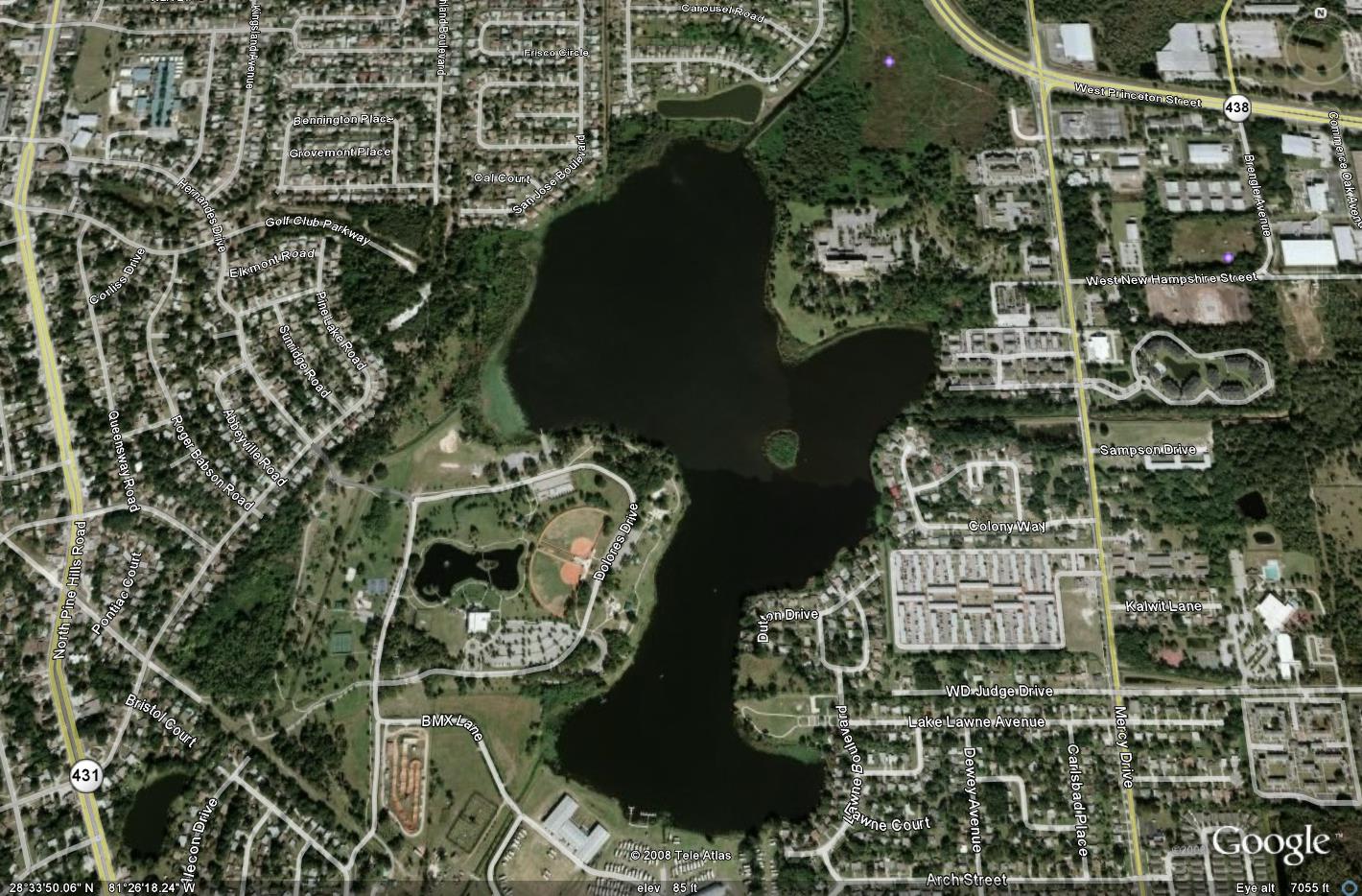
The Lake Lawne In-Lake Algal Turf Scrubber® (ATS) pilot was implemented for Orange County, Florida, to evaluate attached-algae treatment for nutrient reduction and lake restoration in urban Orlando. The pilot was located at Barnett Park, just west of downtown Orlando near Colonial Drive, where water was pumped directly from Lake Lawne through a pilot-scale ATS floway and returned to the lake.
The Lake Lawne pilot evaluated two approaches: direct treatment of lake water and treatment of stormwater-canal flow before discharge to the lake. This page focuses on the In-Lake Floway because direct lake-water treatment provided the more consistent operating conditions and was identified in the final report as the more effective ATS application for restoring Lake Lawne water quality and supporting future full-scale nutrient-reduction planning.
Project Summary
Facility: Lake Lawne In-Lake Algal Turf Scrubber® Pilot
Location: Barnett Park, Orange County, Florida
Technology: Algal Turf Scrubber® / attached-algae floway
Scale: 400-foot-long by 1-foot-wide pilot floway
Floway Slope: 1.0%
Design Inflow: 28,000 GPD
Influent TN: 0.90 mg/L during the April 8, 2009 through June 30, 2009 monitoring period
Influent TP: 80 µg/L during the April 8, 2009 through June 30, 2009 monitoring period
Status: Pilot testing completed
Operating Period: January 13, 2009 to June 30, 2009
Status: Pilot testing completed
Source Water: Lake Lawne surface water
Operating Context: Urban lake restoration; nutrient TMDL planning; comparison of in-lake and stormwater treatment approaches
Application: Total phosphorus reduction, total nitrogen reduction, algal biomass production, direct lake-water treatment evaluation, and full-scale system modeling
Owner / Sponsor: Orange County Environmental Protection Division
HydroMentia Role: Pilot system design, installation support, operation, monitoring, data evaluation, ATSDEM modeling, implementation strategy development, and final reporting
Operating Context
Lake Lawne is an urban lake in Central Florida located within the Orlando metropolitan area. The lake and its drainage basin receive stormwater inputs from surrounding developed areas, and nutrient reduction was being evaluated as part of broader lake restoration and Total Maximum Daily Load planning.
The Lake Lawne ATS pilot was designed to compare two potential treatment approaches. The In-Lake Floway received water pumped directly from Lake Lawne, representing an internal lake-restoration approach. The Stormwater Floway received water from a tributary stormwater canal, representing an external approach intended to treat runoff before it entered the lake.
During the pilot, the stormwater floway was affected by substantial variation in flow and water quality associated with stormwater runoff. Those fluctuations did not support consistent algal turf development or stable treatment performance. In contrast, the In-Lake Floway benefited from more consistent source-water conditions and provided the primary basis for evaluating future ATS application at Lake Lawne.
Operational Significance
The Lake Lawne pilot is significant because it evaluated ATS technology for direct treatment of urban lake water under Central Florida conditions. Rather than treating a point-source discharge or a large agricultural drainage canal, the In-Lake Floway tested whether lake water could be circulated through an ATS system to reduce nutrient loads and support restoration of an impaired urban lake.
Because the Lake Lawne pilot was operated for only approximately six months, the results should be interpreted as an early-stage assessment rather than a full demonstration of mature-system performance. As with other biological treatment systems, ATS performance depends on the development of a stable attached-algae community. The first several months of operation are typically a start-up and stabilization period, during which algal turf composition, standing crop, productivity, and nutrient-removal performance are still developing.
This start-up period also occurred during cooler seasonal conditions, with Q1 average lake-water temperature substantially lower than during Q2. Since ATS productivity is typically reduced at lower water temperatures, particularly near 15°C or below, the early monitoring period likely provided a conservative indication of treatment potential. The In-Lake Floway showed signs of stabilization by early April 2009, but the limited project duration did not allow confirmation that the algal turf community had reached full maturity.
Even with those limitations, the In-Lake Floway provided the most useful performance basis for future Lake Lawne applications. Compared with the stormwater floway, which was affected by variable stormwater flows and water quality, the direct lake-water source provided more consistent operating conditions. The final report therefore identified the In-Lake approach as the more effective ATS application for Lake Lawne restoration and for evaluating future full-scale nutrient-reduction strategies.
Performance Summary
Performance evaluation for the In-Lake Floway focused primarily on the second quarter of 2009, after the initial start-up period and after the algal turf community showed signs of stabilization. During that period, the In-Lake Floway achieved total phosphorus and total nitrogen areal removal rates of approximately 14.29 g/m²-year and 11.72 g/m²-year, respectively.
Mean total phosphorus concentrations were reduced from approximately 80 ppb in the influent to approximately 65 ppb in the effluent, representing a 19% reduction. Mean total nitrogen concentrations were approximately 0.90 mg/L in the influent and 0.89 mg/L in the effluent, representing a smaller nitrogen reduction during the short pilot period.
The Lake Lawne TMDL in-lake goals referenced in the final report were 55 ppb total phosphorus and 1.1 mg/L total nitrogen. The In-Lake Floway results indicated that direct ATS treatment could contribute to phosphorus reduction and lake-restoration planning, while also providing data for full-scale modeling and phased implementation.
Full-Scale Implementation Concept
The final report recommended that future full-scale implementation be approached cautiously because the pilot duration was short and the algal turf community may not have reached full maturity. Two implementation options were identified.
The first option was to conduct an extended In-Lake pilot study for a full 12-month operational period to confirm performance using a more complete seasonal dataset. The second option was to proceed with phased full-scale implementation, beginning with a 5-acre Phase 1 system treating approximately 10 MGD from Lake Lawne. Phase 1 would provide significant water-quality improvement while also refining system capability, standing crop management, and full-scale design assumptions before Phase 2 expansion.
Modeling projections for the 10 MGD Phase 1 facility indicated potential annual phosphorus removal of approximately 510 to 963 pounds per year, equal to about 20.5% to 38.8% of the Lake Lawne TMDL requirement. Projected annual nitrogen removal was approximately 2,109 to 4,059 pounds per year, equal to about 19.5% to 37.6% of the TMDL requirement.
Lessons Learned
The Lake Lawne pilot reinforced the importance of source-water consistency for ATS performance. The In-Lake Floway produced the more useful dataset because lake water provided steadier flow and water-quality conditions than the tributary stormwater canal.
The project also reinforced the importance of sufficient pilot duration. A six-month pilot, particularly one that begins during cooler seasonal conditions, may not provide enough time to fully evaluate mature ATS performance. Longer-duration testing allows the algal turf community to pass through start-up and stabilization, respond to seasonal changes, and provide a more complete basis for full-scale system design.
From a technology-development perspective, Lake Lawne helped clarify that direct in-lake circulation may be a more practical ATS strategy for some urban lake-restoration projects than direct treatment of highly variable stormwater runoff, unless stormwater treatment is paired with detention, equalization, or other flow-buffering infrastructure.
Photographs
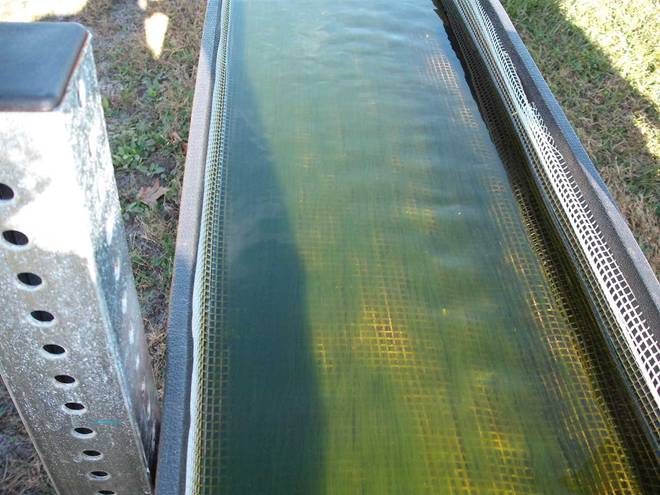
Photographs of the Lake Lawne In-Lake ATS pilot show the pilot floway, lake-water intake and conveyance system, algal turf development, monitoring activities, and the urban lake-restoration setting at Barnett Park. Additional project photographs may be added as available.
View Lake Lawne ATS photo gallery
Additional facility photographs are available in HydroMentia’s Facebook photo archive. Facebook may require visitors to sign in to view the complete gallery.
Reports and Publications
The Lake Lawne In-Lake ATS pilot is documented in HydroMentia’s final report prepared for the Orange County Environmental Protection Division.
Technical report: Lake Lawne Algal Turf Scrubber® Pilot Facility — In-Lake Floway Final Report — August 30, 2009
The report was prepared as formal project technical documentation under an approved Quality Assurance / Quality Control plan and was submitted to the sponsoring agency for technical review, comment, revision, and final acceptance.
Influent and effluent water quality monitoring used automated composite samplers operated on a time-interval basis. Analyses included total nitrogen, total phosphorus, and individual nitrogen and phosphorus species, providing a robust basis for evaluating ATS performance.
A separate stormwater-floway report was also prepared for the same pilot project. That report evaluated the stormwater-canal treatment approach and documented the operational challenges associated with variable stormwater flow and water quality.
Additional reports and publications related to Algal Turf Scrubber® technology and facility-scale applications are available in HydroMentia’s ATS Library.
Related Projects
Related HydroMentia ATS facilities and demonstrations include Falls Lake ATS, Santa Fe ATS, Suwannee River Regional ATS Assessment, PC-South/Osprey Marsh ATS, Osprey Marsh ATS, Egret Marsh ATS, S-154 ATS, NYCDEP Rockaway ATS, Maryland Port Administration Algal Flow-Way, and other full-scale and pilot-scale attached-algae treatment systems.