
Algal Turf Scrubber® technology can be applied to nonpoint source pollution where nutrient loads are carried in stormwater runoff, agricultural drainage, surface-water flows, and other distributed water sources.

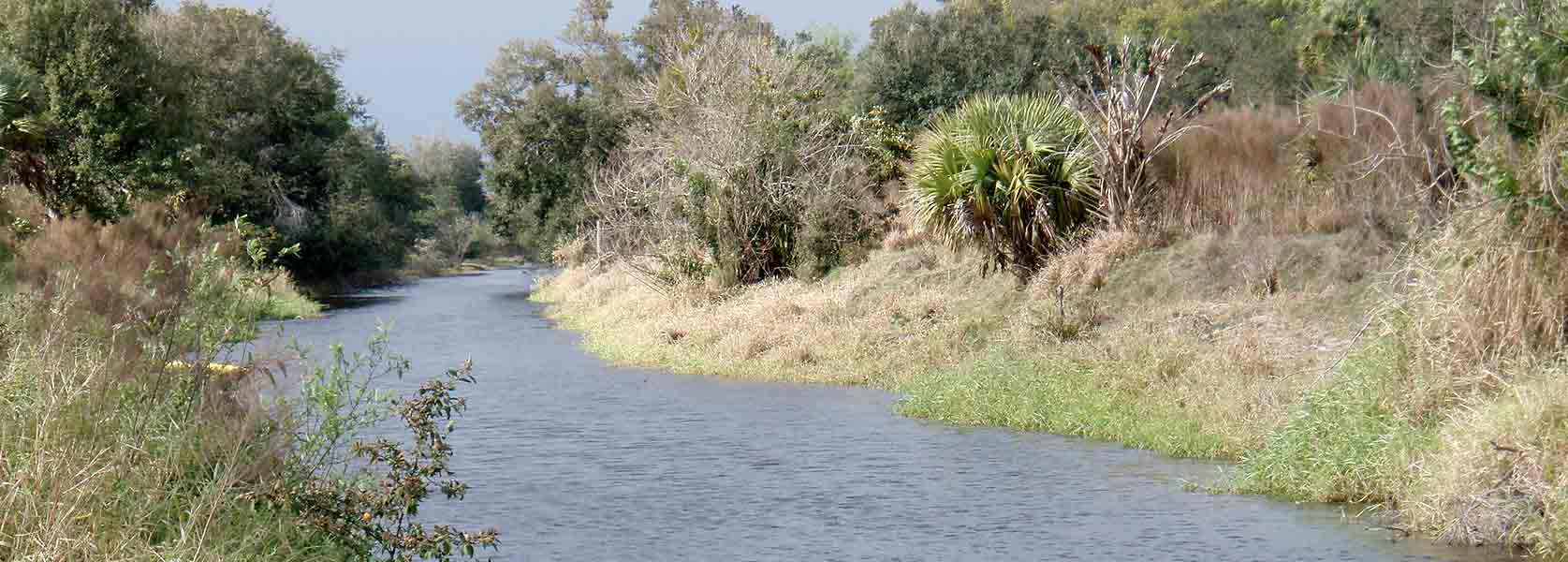
Egret Marsh ATS polishing pond. Regional treatment systems can help address nonpoint source pollution where large water volumes carry relatively dilute nutrient loads.
Nonpoint source applications are often challenging because pollutant concentrations may be relatively low while total water volumes and annual nutrient loads are large. ATS systems are well suited to this type of application because they are designed to treat large flows across shallow, high-rate floways while supporting attached algal growth, nutrient uptake, filtration, and routine biomass harvesting.
For nutrient-impaired waters, ATS systems can support both load reduction and treatment toward low receiving-water nutrient concentrations. This makes the technology relevant for Total Maximum Daily Load (TMDL) implementation, watershed restoration, stormwater treatment, agricultural runoff management, and protection of downstream lakes, rivers, estuaries, and coastal waters.
ATS systems have been evaluated and operated in Florida watersheds where phosphorus and nitrogen concentrations are relatively low compared with many wastewater sources. These applications demonstrate the importance of treatment technologies that can remove nutrients efficiently under dilute, high-flow conditions.
In the Lake Okeechobee watershed, regional phosphorus-control evaluations identified managed aquatic plant systems and treatment wetlands among the more proven approaches for large-scale phosphorus control. ATS systems provide a complementary option where high areal removal rates, reduced land requirements, biomass recovery, and adaptability to site-specific hydraulic and water-quality conditions are important project objectives.