
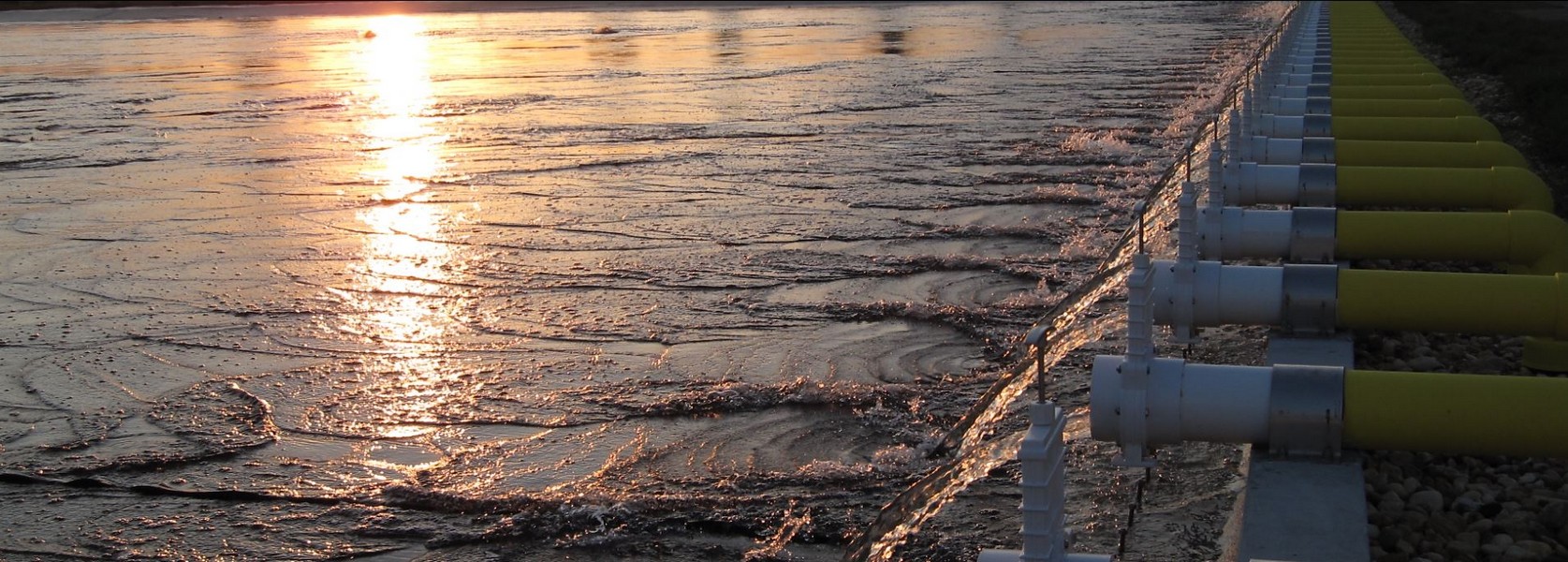
Algal Turf Scrubber® technology can be designed and operated to support a wide range of phosphorus reduction goals, including load reduction, surface-water restoration, stormwater treatment, agricultural runoff treatment, and advanced wastewater polishing.
Phosphorus is removed through a combination of algal uptake, filtration, natural precipitation, and biomass recovery. As water flows across the ATS floway, attached algal communities capture phosphorus from the water column and incorporate a portion of that phosphorus into recoverable biomass. Routine harvesting removes accumulated algal biomass from the system and provides a physical mechanism for long-term phosphorus recovery.
When phosphorus load reduction is the primary objective, ATS systems have demonstrated high areal removal rates compared with many natural and constructed wetland treatment systems. For projects where low effluent concentrations are required, ATS systems can be configured to support treatment toward low receiving-water or near-background phosphorus concentrations.
Unlike treatment approaches that primarily store phosphorus in sediments or generate chemical sludge, ATS systems recover phosphorus in harvested biomass. Depending on source-water quality and project objectives, recovered biomass may be managed for beneficial reuse, composting, soil amendment, or other appropriate end uses.
Annual phosphorus removal rates of more than 800 pounds per acre of treatment area have been achieved while treating stormwater runoff in the Lake Okeechobee watershed. Under comparable phosphorus inflow concentrations, ATS systems have demonstrated phosphorus removal per acre up to 75 times greater than large constructed treatment wetlands.


S-154 ATS testing showed higher phosphorus areal removal rates at higher Linear Hydraulic Loading Rates (LHLR), with substantially greater areal removal than the Everglades STA reference. LHLR is the flow applied per unit width of ATS floway, expressed as gallons per minute per linear foot (gpm/lf).