

A beneficial feature of Algal Turf Scrubber® technology is the recovery of carbon through photosynthetic algal growth. As attached algal communities grow on the ATS floway, carbon dioxide is incorporated into new algal biomass along with nitrogen, phosphorus, and other constituents removed from the water.
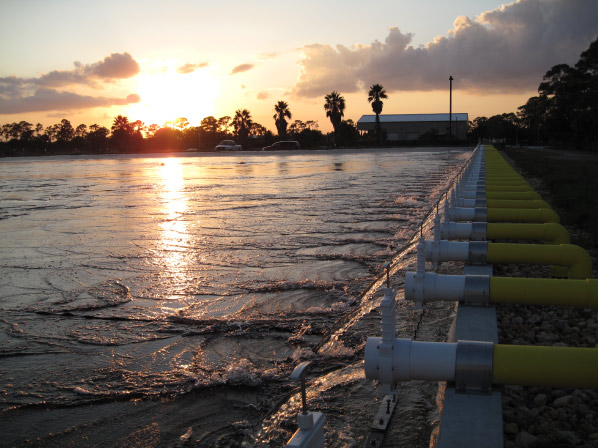
This carbon recovery is directly linked to the water-treatment function of the system. ATS floways are designed to maintain active algal growth, and routine harvesting removes accumulated biomass from the treatment surface. In this way, carbon captured through algal production is physically recovered as part of normal system operation.
Algae-based systems have long been studied for their ability to convert carbon dioxide, nutrients, and sunlight into recoverable biomass. Many suspended algae systems face practical challenges associated with maintaining cultures and separating microscopic algae from large volumes of water. ATS systems address this challenge by supporting attached algal communities that can be harvested mechanically from shallow floways.
For most HydroMentia projects, the primary objectives remain nutrient reduction, surface-water restoration, stormwater treatment, wastewater polishing, and resource recovery. However, carbon capture is an important environmental co-benefit of these applications. Each harvest removes algal biomass containing carbon and nutrients that would otherwise remain in the aquatic system.
As interest in carbon management, climate resilience, and resource recovery continues to grow, ATS technology provides a practical platform for combining water quality improvement with recoverable biological carbon production. The result is a treatment approach that removes nutrients, produces harvestable biomass, and supports broader environmental goals beyond conventional water treatment alone.