
The Everglades Agricultural Area Algal Turf Scrubber® (ATS) pilot was one of the earliest outdoor field demonstrations of ATS technology for phosphorus removal from nutrient-enriched surface waters. The study was conducted in the New Hope region of the Everglades Agricultural Area, south of Lake Okeechobee, and evaluated controlled algal production using agricultural drainage canal water.
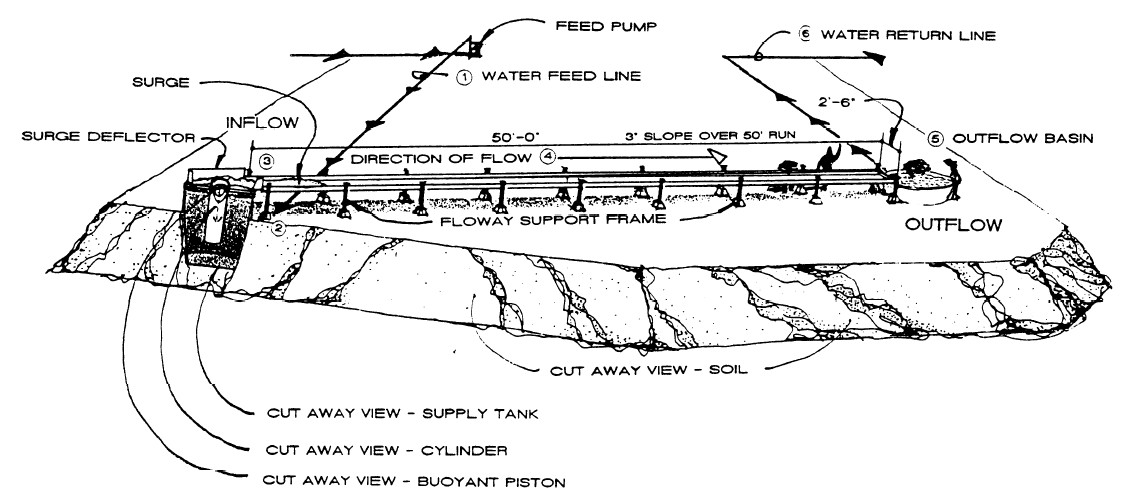
This project predates HydroMentia’s later full-scale ATS facilities, but it is included here because it represents an important early step in the outdoor development history of ATS technology. Dr. Walter Adey, who later became a founding shareholder and board member of HydroMentia, developed ATS while conducting research at the Smithsonian Institution. The Everglades Agricultural Area pilot helped move the technology from controlled research systems toward outdoor environmental water-treatment applications.
Project Summary
Facility: Everglades Agricultural Area ATS Pilot
Location: New Hope region, Everglades Agricultural Area, Florida
Technology: Algal Turf Scrubber® / attached-algae floway
Scale: 50-foot outdoor ATS floway; additional 16-foot serial plant ATS floway
Status: Historical pilot completed
Operating Period: 1991–1992
Source Water: Everglades Agricultural Area agricultural drainage canal water
Average Flow: 37,000 GPD for the primary outdoor floway
Influent TN: not reported / not analyzed in the available project data
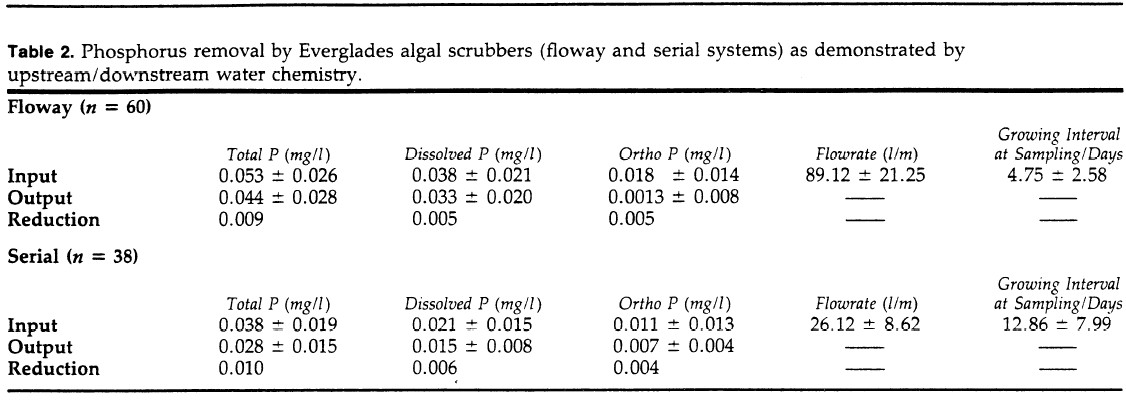
Influent TP: 53 µg/L for the main floway; 38 µg/L for the serial floway
Operating Context: early outdoor ATS field demonstration; agricultural drainage-water treatment; phosphorus removal; pre-STA Everglades restoration context
Application: phosphorus removal from nutrient-enriched surface water, controlled algal production, algal biomass harvesting, and early outdoor ATS design evaluation
Operating Context
The Everglades Agricultural Area is an intensively managed agricultural region south of Lake Okeechobee. Agricultural drainage from the region historically contributed phosphorus loads to downstream Everglades waters. At the time of this early ATS study, the large Stormwater Treatment Areas later constructed by the South Florida Water Management District had not yet been developed.
The project was conducted to evaluate whether controlled algal production could remove phosphorus from natural waters under outdoor field conditions. Source water was drawn from an agricultural drainage canal serving the Everglades Agricultural Area. The study therefore addressed a water-quality problem that would later become central to Everglades restoration: reducing phosphorus concentrations and loads in waters moving south from agricultural landscapes.
The exact field location is identified in the available paper as the New Hope region of the Everglades Agricultural Area, approximately 25 km south of Lake Okeechobee. Based on that description, the study site appears to have been within the central Everglades Agricultural Area, west of the area where STA-1W was later constructed.
Pilot Configuration
The study used a 50-foot-long outdoor ATS floway as the primary experimental system. The floway received agricultural drainage canal water and supported controlled algal production on a managed attachment surface. The project evaluated algal turf development, harvesting frequency, biomass production, phosphorus content of harvested algae, and phosphorus reduction through the floway.
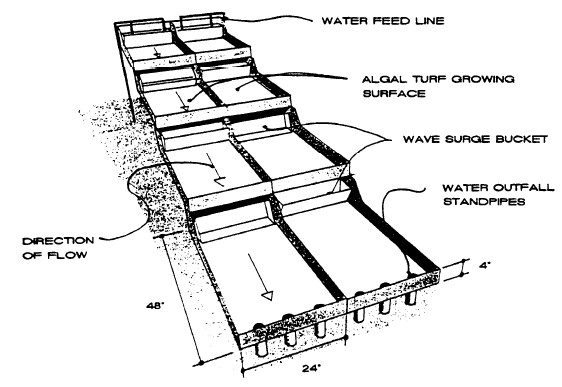
A second serial plant ATS floway was also evaluated. This serial system was approximately 16 feet long and was operated downstream under lower phosphorus concentrations. The serial floway provided an early test of additional polishing potential after upstream phosphorus reduction had already occurred.
The serial floway was operated at a reported linear hydraulic loading rate of approximately 5.2 gpm per linear foot. For the water-chemistry comparison, the reported growing interval at sampling averaged approximately 4.8 days for the main floway and approximately 12.9 days for the serial floway.
Historical Significance
The Everglades Agricultural Area pilot is significant because it represents one of the first outdoor applications of ATS technology to nutrient-enriched environmental waters. Earlier ATS development had been strongly connected to controlled aquatic systems and Smithsonian research. This project helped test the concept under real field conditions, using agricultural drainage water, outdoor sunlight, variable weather, natural algal succession, and harvestable attached algal biomass.
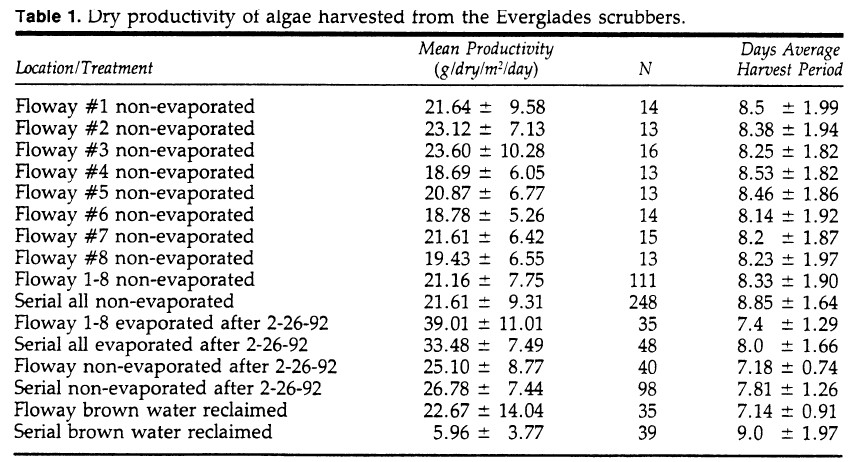
The study demonstrated that attached algal communities could be cultivated and harvested in outdoor floways and that phosphorus could be removed from agricultural drainage water through controlled algal production. It also provided early information on algal community development, harvesting frequency, biomass production, phosphorus content of harvested algae, and phosphorus removal under field conditions.
Although this project was much smaller than later HydroMentia facilities, it helped establish the outdoor treatment logic that HydroMentia later advanced at larger scale: shallow flow across managed algal growth surfaces, periodic harvesting, and long-term nutrient removal through biomass recovery.
Performance Summary
The available paper focused on phosphorus removal. Nitrogen was not a primary reported analyte in the available project data and should not be inferred for this facility.
For the primary outdoor ATS floway, total phosphorus was reduced from approximately 53 µg/L to approximately 44 µg/L. For the serial floway, total phosphorus was reduced from approximately 38 µg/L to approximately 28 µg/L. These results are important because the serial floway demonstrated additional phosphorus reduction at already-low phosphorus concentrations.
The study also reported phosphorus removal through harvested algal biomass. Performance varied with operating conditions, algal productivity, floway configuration, and season. Stronger performance was associated with higher algal productivity and effective biomass harvesting.
Because the system was an early experimental field installation, the results should be interpreted as historical research data rather than as a full-scale facility performance record. Even so, the project provided important evidence that controlled algal production could remove phosphorus from Everglades Agricultural Area drainage water under outdoor field conditions.
Algal Community and Harvesting
The study documented development of attached algal communities on the outdoor floways. Early and mature algal turf communities included filamentous green algae, diatoms, and other periphytic organisms typical of nutrient-enriched outdoor systems. These algal communities formed harvestable biomass capable of incorporating phosphorus from the source water.
Harvesting was a central part of the treatment process. By removing algal biomass from the floway, phosphorus incorporated into the algal community was physically removed from the water-treatment system. The paper reported harvest-period data and water-chemistry sampling intervals, illustrating the early recognition that ATS performance depends on maintaining actively growing algal turf through regular biomass removal.
Operational Significance
The Everglades Agricultural Area ATS pilot provided several important lessons for later ATS development.
First, it showed that ATS could be operated outdoors on agricultural drainage water, rather than only in controlled laboratory or aquarium systems.
Second, it demonstrated that algal turf communities could develop on engineered floways and be managed through periodic harvesting.
Third, it showed that phosphorus reduction could occur even at relatively low influent phosphorus concentrations, including additional polishing in the 16-foot serial floway.
Fourth, it helped connect ATS technology to the phosphorus-control challenges of South Florida, particularly agricultural runoff and Everglades restoration.
For HydroMentia’s facility archive, the project is important because it helps explain the technical lineage of ATS before the company’s later full-scale work. Harmony Creek, S-154, STA-1W, Taylor Creek, and later Indian River County projects were not isolated developments; they built on a foundation of Smithsonian ATS research and early outdoor field demonstrations such as this Everglades Agricultural Area study.
Lessons Learned
The Everglades Agricultural Area ATS pilot demonstrated the potential for controlled algal production to remove phosphorus from nutrient-enriched agricultural drainage water. It also showed the complexity of outdoor biological treatment, including algal community succession, seasonal effects, water-quality variability, and the importance of harvest management.
The project’s phosphorus focus reflected the major water-quality concern of the Everglades system. Because nitrogen was not reported in the available data, the study should be presented primarily as an early phosphorus-removal demonstration.
This historical pilot helped establish ATS as a candidate technology for environmental water treatment and provided an important bridge between Smithsonian research and the later HydroMentia facilities developed in Florida and elsewhere.
Photographs and Figures
Reports and Publications
Adey, W., Luckett, C., and Jensen, K. 1993. Phosphorus Removal from Natural Waters Using Controlled Algal Production. Restoration Ecology.
Related Projects
Related HydroMentia ATS facilities and demonstrations include STA-1W ATS, Patterson ATS, Egret Marsh ATS, Osprey Marsh ATS, and other full-scale and pilot-scale systems.