
The Patterson Algal Turf Scrubber® (ATS) project was one of the earliest large-scale outdoor evaluations of ATS technology for municipal wastewater treatment. The project was conducted at the City of Patterson wastewater treatment plant in California’s Central Valley and evaluated whether ATS treatment, combined with downstream solids filtration and ultraviolet disinfection where needed, could polish secondary wastewater effluent for potential discharge or reuse.

This project predates HydroMentia’s later full-scale ATS facilities, but it is included here because it represents an important early step in the development history of outdoor ATS treatment systems. Along with the Everglades Agricultural Area ATS pilot, Patterson helped move ATS technology from controlled research systems toward engineered outdoor treatment facilities operating on real water-quality challenges.
Project Summary
Facility: Patterson ATS Pilot
Location: City of Patterson wastewater treatment plant, Patterson, California
Technology: Algal Turf Scrubber® / attached-algae floway, with supplemental solids filtration and ultraviolet disinfection evaluated during portions of the project
Scale: 500 feet long by 21.3 feet wide; approximately 1,000 m² treatment area
Floway Slope: 0.5% upper section; 0.25% lower section
Average Inflow: 0.12–0.32 MGD, depending on hydraulic loading condition
Status: Historical pilot completed
Operating Period: 1993–1996
Source Water: Secondary municipal wastewater effluent from the Patterson wastewater treatment facility and associated evaporation / infiltration pond water
Influent TN: 13.2 mg/L during the Phase 1 annual evaluation period
Influent TP: 3.1 mg/L during the Phase 1 annual evaluation period
Operating Context: Large-scale municipal wastewater ATS evaluation; tertiary nutrient polishing; phosphorus removal; nitrogen removal and nitrification; mechanical harvesting; process optimization
Application: Municipal wastewater polishing, phosphorus removal, nitrogen transformation and removal, biomass harvesting, solids recovery, UV disinfection support, floway-surface evaluation, and ATS process-design development
Operating Context
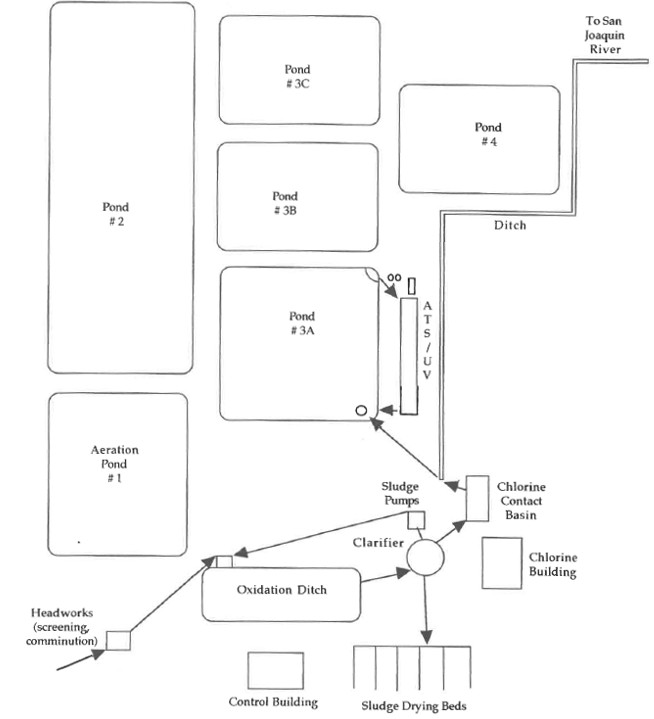
The City of Patterson wastewater treatment facility served as an early field site for evaluating ATS treatment of secondary municipal wastewater effluent. At the time, the treated wastewater was managed through evaporation and infiltration ponds, while future discharge or reuse applications required additional treatment and regulatory evaluation.
The Patterson project was conducted by researchers associated with the University of California, Berkeley, working with ATS technology developed by Dr. Walter Adey of the Smithsonian Institution. The project evaluated whether a large outdoor ATS floway could provide tertiary polishing of secondary wastewater, with emphasis on nutrient removal, algal biomass productivity, solids control, and mechanical harvesting.
The project was important because the source water was very different from the lower-nutrient agricultural drainage and surface-water applications evaluated in other early ATS studies. Patterson wastewater contained much higher nitrogen and phosphorus concentrations, making the project an early test of ATS performance under municipal wastewater polishing conditions.
Pilot Configuration
The Patterson ATS floway was approximately 500 feet long and 21 feet wide. The floway was constructed on laser-graded soil using a textured high-density polyethylene liner attached between precast concrete grade beams. The upper half of the floway was constructed at a 0.5% slope, and the lower half at a 0.25% slope, with the design intent to maintain uniform flow and promote treatment across the length of the system.
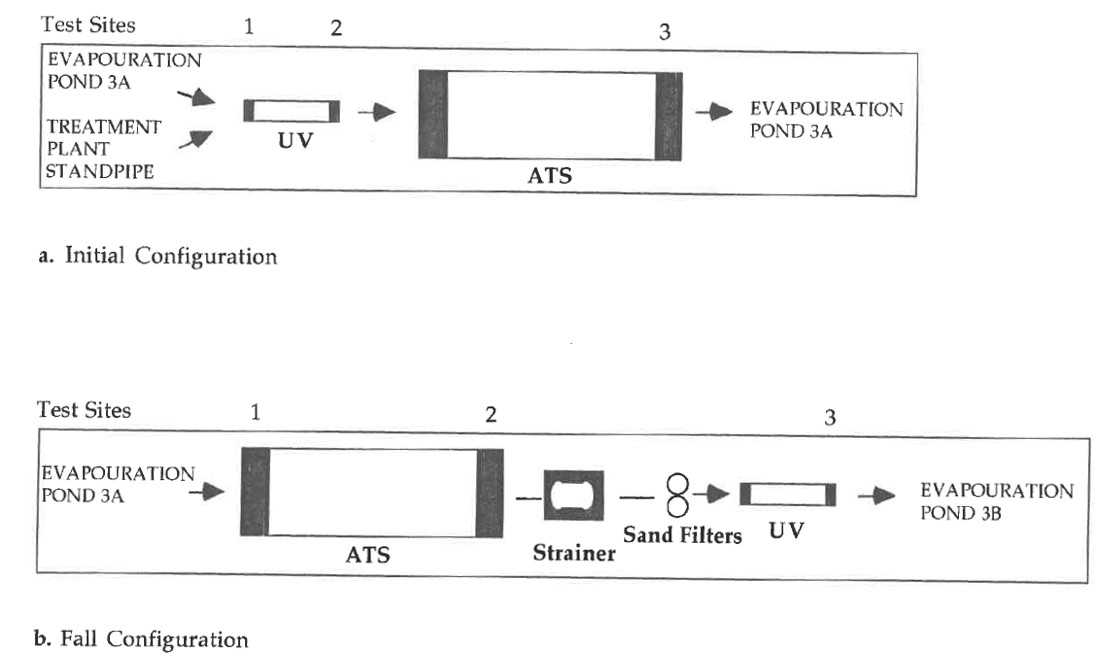
Wastewater was applied to the head of the floway using a wave/surge device. The system was evaluated with supplemental components including a rotary screen strainer, sand filtration, and ultraviolet disinfection. During portions of the project, the configuration was changed to evaluate whether ATS treatment followed by solids filtration and UV disinfection could produce effluent suitable for future discharge requirements.
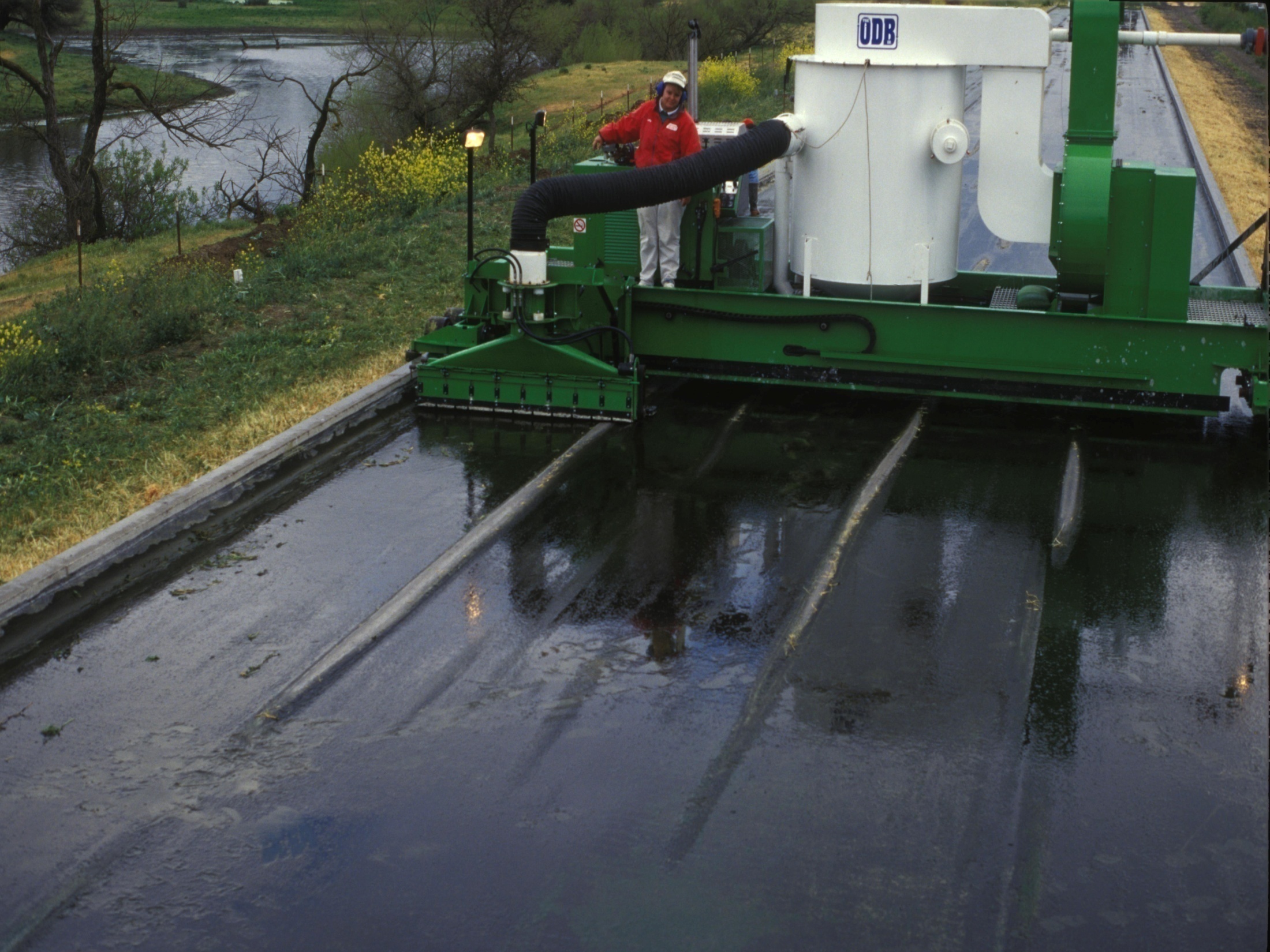
The project also evaluated mechanical harvesting. Algal biomass was removed from the floway surface and transferred for handling and measurement. This was a critical scale-up issue because successful ATS operation depends on maintaining actively growing algal turf and physically removing accumulated biomass and associated nutrients from the treatment system.
Operational Phases
The Patterson work was conducted in two major phases.
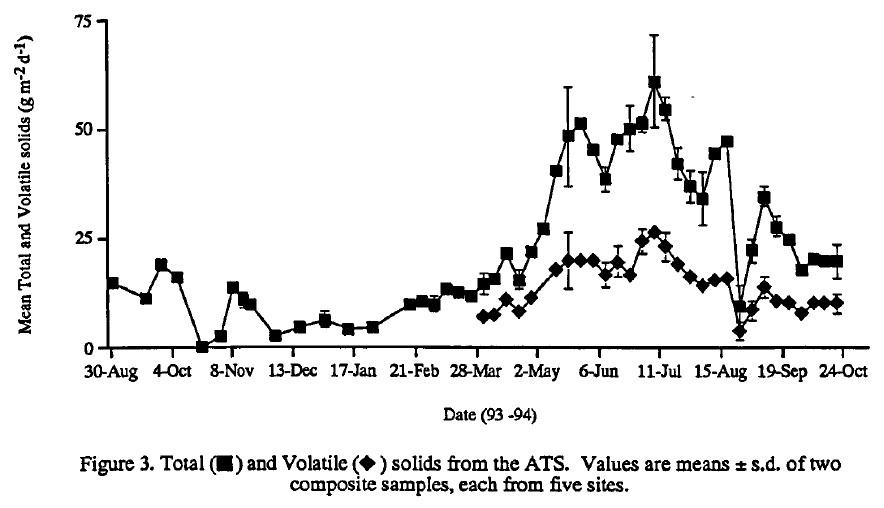
The Phase 1 evaluation, conducted from 1993 through 1994, focused on the ability of the ATS / UV system to polish secondary wastewater effluent and evaluate phosphorus removal, algal productivity, hydraulic loading, solids removal, and disinfection-related treatment needs. Flow rates were varied across the study period, and the system was operated under seasonal conditions to evaluate performance across different solar and temperature regimes.
The Phase 2 evaluation, conducted from 1995 through early 1996, investigated additional process-design questions. The floway was split longitudinally into two side-by-side floways so that one side could be used as a control while the other side was modified. This allowed evaluation of floway surface screens, hydraulic loading velocity, floway length, overnight flow, harvest interval, higher-BOD influent, and ammonium dosing.
Together, the two phases made Patterson one of the most important early ATS process-development projects. The project was not simply a nutrient-removal test; it was also an engineering evaluation of how ATS systems should be configured, loaded, harvested, and integrated with solids removal and disinfection systems.
Performance Summary
The Patterson ATS demonstrated that an outdoor ATS floway could remove phosphorus and transform or remove nitrogen from secondary municipal wastewater effluent.
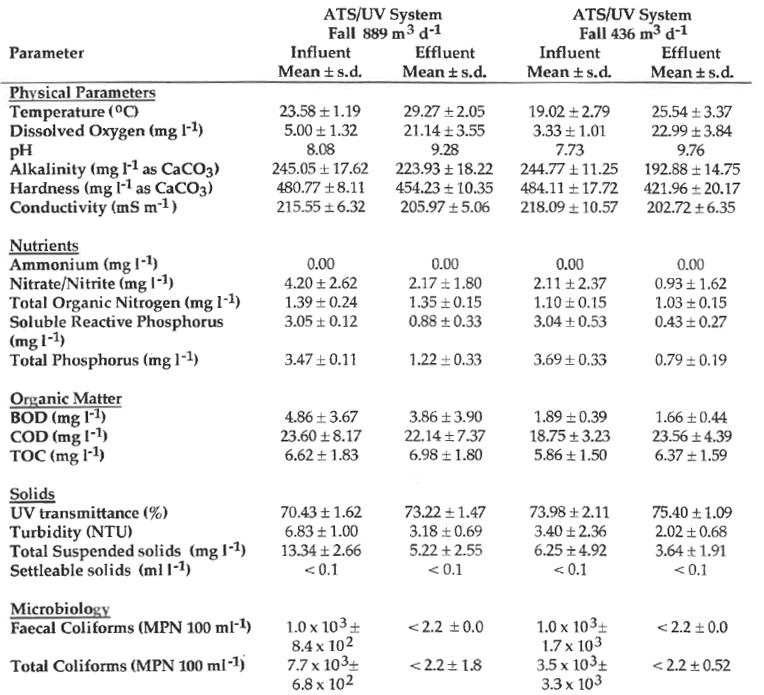
During the Phase 1 annual evaluation period, mean influent nitrogen was approximately 13.2 mg/L when ammonium, nitrate/nitrite, and organic nitrogen fractions were considered together. Mean influent total phosphorus was approximately 3.1 mg/L and mean effluent total phosphorus was approximately 1.7 mg/L. The project also reported substantial increases in dissolved oxygen and pH across the floway, reflecting high rates of algal photosynthesis.
The Phase 2 evaluation confirmed that the ATS could remove significant amounts of nitrogen and phosphorus and could convert ammonium to nitrate. Under some operating conditions, ammonium removal was largely associated with nitrification, while additional nitrogen removal appeared to involve uptake, filtration of particulate nitrogen, and possible denitrification within anoxic microenvironments in the algal turf.
Phosphorus removal was influenced strongly by pH. The studies indicated that as wastewater moved across the floway, algal photosynthesis increased pH, and phosphorus removal was associated with biological uptake, particulate filtration, and pH-mediated precipitation. Lower hydraulic loading and longer contact time generally improved effluent phosphorus concentrations, although higher hydraulic loading could increase total mass removal by treating a greater volume of water.
Hydraulic Loading and Floway Length
Patterson provided early field evidence that hydraulic loading, residence time, and floway length are central ATS design variables. The Phase 1 study showed that lowering hydraulic loading increased pH and improved phosphorus removal at high influent concentrations, while the Phase 2 study further evaluated this relationship by operating the split floway at different hydraulic loading velocities.
The project also showed that treatment did not occur uniformly along the entire floway. Several water-quality parameters changed progressively with distance, and some treatment effects became more pronounced after the wastewater had traveled a substantial distance down the floway. This supported the conclusion that longer floways or modified hydraulic configurations could improve nitrogen and phosphorus removal.
These findings were important for later ATS design. Patterson demonstrated that effluent concentration, areal removal rate, hydraulic loading, and total mass removal must be interpreted together. A lower hydraulic loading rate may improve effluent quality, while a higher hydraulic loading rate may remove more total pollutant mass if the system objective is load reduction.
Floway Surface, Harvesting, and Biomass Management
Patterson also provided important information on floway surface design and harvest management. Early operation showed that a textured liner alone did not always maintain sufficient filamentous standing crop after harvest. Phase 2 therefore evaluated screens and surface textures intended to retain algal holdfasts, improve regrowth, and maintain productivity following harvest.
The screen studies showed that surface texture influenced biomass accumulation, nutrient accumulation, and algal community development. The project also evaluated harvest intervals and found that regular harvesting was important for maintaining treatment performance, controlling sloughing, and reducing operational problems.
Mechanical harvesting was one of the most important engineering elements of the Patterson project. Earlier ATS systems were smaller research systems; Patterson helped demonstrate that algal biomass could be harvested mechanically from a large outdoor floway. This practical experience contributed to later ATS scale-up and biomass management strategies.
Operational Significance
The Patterson ATS project was significant for several reasons.
First, it was one of the earliest large-scale outdoor ATS evaluations for municipal wastewater treatment.
Second, it showed that ATS could remove phosphorus from secondary wastewater, with phosphorus removal influenced by both algal uptake and pH-mediated precipitation.
Third, it demonstrated that ATS could remove or transform nitrogen, including conversion of ammonium to nitrate under oxygen-rich floway conditions.
Fourth, it evaluated mechanical harvesting, floway surface screens, harvest interval, hydraulic loading, overnight flow, and floway length under real field conditions.
Fifth, it helped clarify that ATS systems can be designed for different objectives: improved effluent quality, increased mass removal, nutrient polishing, biomass production, or process research.
The Patterson work was especially important because it identified both the promise and the design challenges of ATS wastewater treatment. It showed that ATS could be a powerful tertiary polishing tool, but also that performance depended on hydraulic design, algal community structure, harvesting, pH management, solids capture, and whether the treatment objective was concentration reduction or load removal.
Lessons Learned
The Patterson ATS project provided several lessons that influenced later ATS development.
ATS treatment can remove nitrogen and phosphorus from secondary municipal wastewater, but system performance depends strongly on hydraulic loading, contact time, algal community, and harvest management.
Phosphorus removal can be strongly influenced by photosynthetic pH elevation and precipitation at higher influent phosphorus concentrations, especially where effluent pH exceeds approximately 9.0.
Longer floways can improve treatment by increasing contact time and allowing pH, dissolved oxygen, nutrient, and solids-removal processes to develop along the flow path.
Floway surface texture and biomass-retention screens can influence algal regrowth, standing crop, and post-harvest recovery.
Mechanical harvesting is essential for maintaining active algal growth and physically removing nutrients accumulated in biomass and associated solids.
Nighttime changes in pH and dissolved oxygen can affect phosphorus retention and release, making diurnal behavior important in ATS design and operation.
Patterson helped establish that ATS systems require engineering control, biological management, and clear performance objectives. Its lessons carried forward into later HydroMentia projects focused on municipal wastewater, surface-water restoration, and watershed-scale nutrient reduction.
Photographs and Figures
Reports and Publications
Craggs, R. J., Adey, W. H., Jensen, K. R., St. John, M. S., Green, F. B., and Oswald, W. J. 1994. Evaluation of the ATS / UV System for Tertiary Wastewater Treatment at Patterson, California. EEHSL Report No. 94-1. University of California, Berkeley.
Craggs, R. J., Adey, W. H., Jensen, K. R., St. John, M. S., Green, F. B., and Oswald, W. J. 1996. Phosphorus Removal from Wastewater Using an Algal Turf Scrubber. Water Science and Technology.
Craggs, R. J., Green, F. B., Lundquist, T. J., and Oswald, W. J. 1996. Investigation and Evaluation of the Feasibility and Performance of the Algal Turf Scrubbing Process at the City of Patterson Wastewater Treatment Plant. EEHSL Report No. 96-2. University of California, Berkeley.
Craggs, R. J., Adey, W. H., Jessup, B. K., and Oswald, W. J. 1996. A Controlled Stream Mesocosm for Tertiary Treatment of Sewage. Ecological Engineering.
Related Projects
Related HydroMentia ATS facilities and demonstrations include Everglades Agricultural Area ATS, Rockaway ATS, Harmony Creek Aquaculture ATS, Egret Marsh ATS, Osprey Marsh ATS, and other full-scale and pilot-scale systems.