
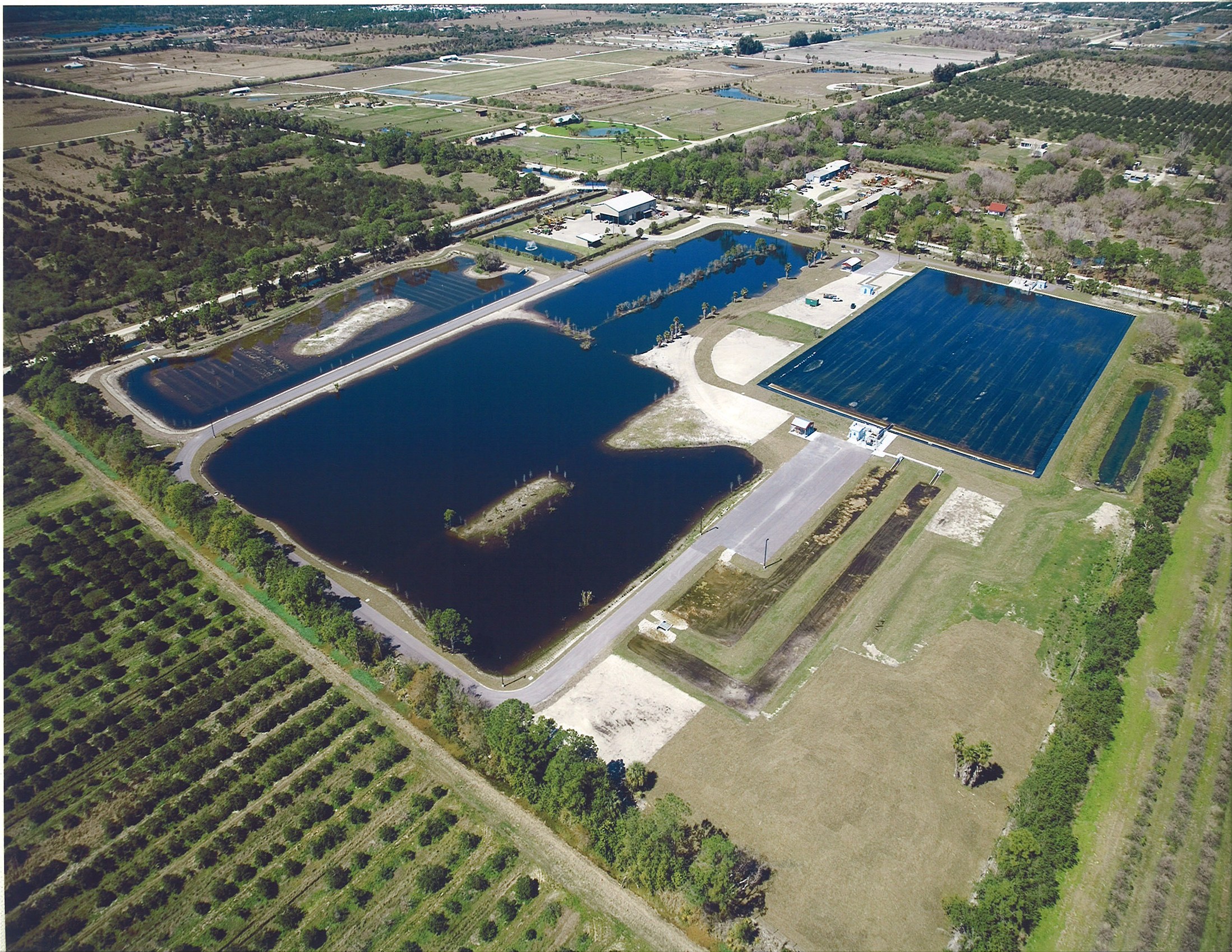
The Egret Marsh Algal Turf Scrubber® (ATS) facility is a full-scale regional stormwater treatment system located in Indian River County, Florida. The facility treats water from the Lateral D Canal, which drains agricultural and urban lands within central and western Indian River County before discharging through the canal network toward the Indian River Lagoon.
Egret Marsh was Indian River County’s first full-scale ATS facility and remains an important operating reference for large-scale nutrient recovery, biomass harvesting, integrated wetland polishing, and long-term facility design evolution.
Project Summary
Facility: Egret Marsh ATS
Location: Indian River County, Florida
Technology: Algal Turf Scrubber®
Scale: 575 feet long by 347 feet wide; approximately 199,525 ft² treatment area
Floway Slope: 0.5%
Design Inflow: 10 MGD
Influent TN: 1.28 mg/L during the March 2, 2005 to April 28, 2005 monitoring period
Influent TP: 110 µg/L during the March 2, 2005 to April 28, 2005 monitoring period
Status: Operating
Operating Period: 2010 to Current
Application: Regional stormwater treatment / nutrient recovery / Indian River Lagoon protection
Source Water: Lateral D Canal water from the Indian River Farms Water Control District canal network
Operating Context: First Indian River County full-scale ATS facility; integrated ATS, pond/wetland polishing, and habitat restoration system
Owner: Indian River County
HydroMentia Role: Technology provider, design support, monitoring, performance assessment, and operational reference
Operating Context
Egret Marsh Stormwater Park was constructed as a regional water quality improvement facility serving the Indian River County canal network. The system was designed to remove and recover nutrients from canal water while also supporting habitat restoration and water quality protection for downstream receiving waters, including the Indian River Lagoon.
The facility includes an ATS floway followed by receiving ponds, wetland polishing areas, and a designated wood stork habitat. This treatment-train configuration allows the ATS to provide active nutrient uptake and biomass recovery, while the pond and wetland components provide additional polishing, solids management, temperature and pH modulation, and ecological habitat value.
During the first-year monitoring period, influent nutrient concentrations were often lower than historical design assumptions because of drought conditions and recirculation within the canal system. Even under these low-nutrient conditions, the system demonstrated nutrient reduction, algal biomass recovery, and the ability to operate at full-scale hydraulic loading.
Design Evolution and Floway Surface
Egret Marsh was originally constructed with a 40-mil HDPE geomembrane floway surface overlain by an attachment grid to support algal turf development. Full-scale operation provided important lessons regarding harvesting, maintenance, liner durability, sediment accumulation, algal attachment, and long-term floway-surface performance.
Early operating experience showed that the original liner-and-grid surface was less durable than desired for long-term municipal operation. Operational observations included localized geomembrane bubbling, grid damage during harvesting, sediment accumulation near the headworks, biological fouling beneath the grid, and maintenance limitations associated with the original surface configuration.
These lessons led to evaluation of more durable floway surface alternatives. Roughened concrete test areas were subsequently evaluated, and the facility was later converted from the original HDPE/grid floway surface to a roughened concrete floway surface. This design evolution was significant because it improved durability, simplified long-term maintenance, and informed the design basis for later full-scale ATS facilities, including Osprey Marsh.
Operational Significance
Egret Marsh ATS is significant because it was Indian River County’s first full-scale ATS implementation and provided the operational foundation for later utility-scale facilities. The facility demonstrated that ATS technology could be integrated into a municipal stormwater treatment train at approximately 10 MGD scale while supporting nutrient recovery, biomass harvesting, and downstream wetland polishing.
During the first-year monitoring period, the Egret Marsh treatment train removed approximately 1,477 pounds of total phosphorus and 5,278 pounds of total nitrogen. The ATS portion accounted for approximately 50 percent of the total phosphorus removal and approximately 52.5 percent of the total nitrogen removal documented for the treatment train during that period.
The system also demonstrated nutrient accountability through biomass recovery. During the monitoring period, the ATS was harvested 28 times and produced approximately 148,765 dry pounds of recovered algal turf biomass. The report concluded that essentially all nitrogen and phosphorus removed by the ATS, as calculated from water quality and flow data, was accounted for within the harvested algal turf biomass.
Egret Marsh is also important because it demonstrated the value of combining active ATS nutrient recovery with passive pond and wetland polishing. The ponds and wetland areas provided additional nutrient reduction, water quality stabilization, and habitat value, including habitat designed to support native birds and wildlife such as the wood stork.
Photographs
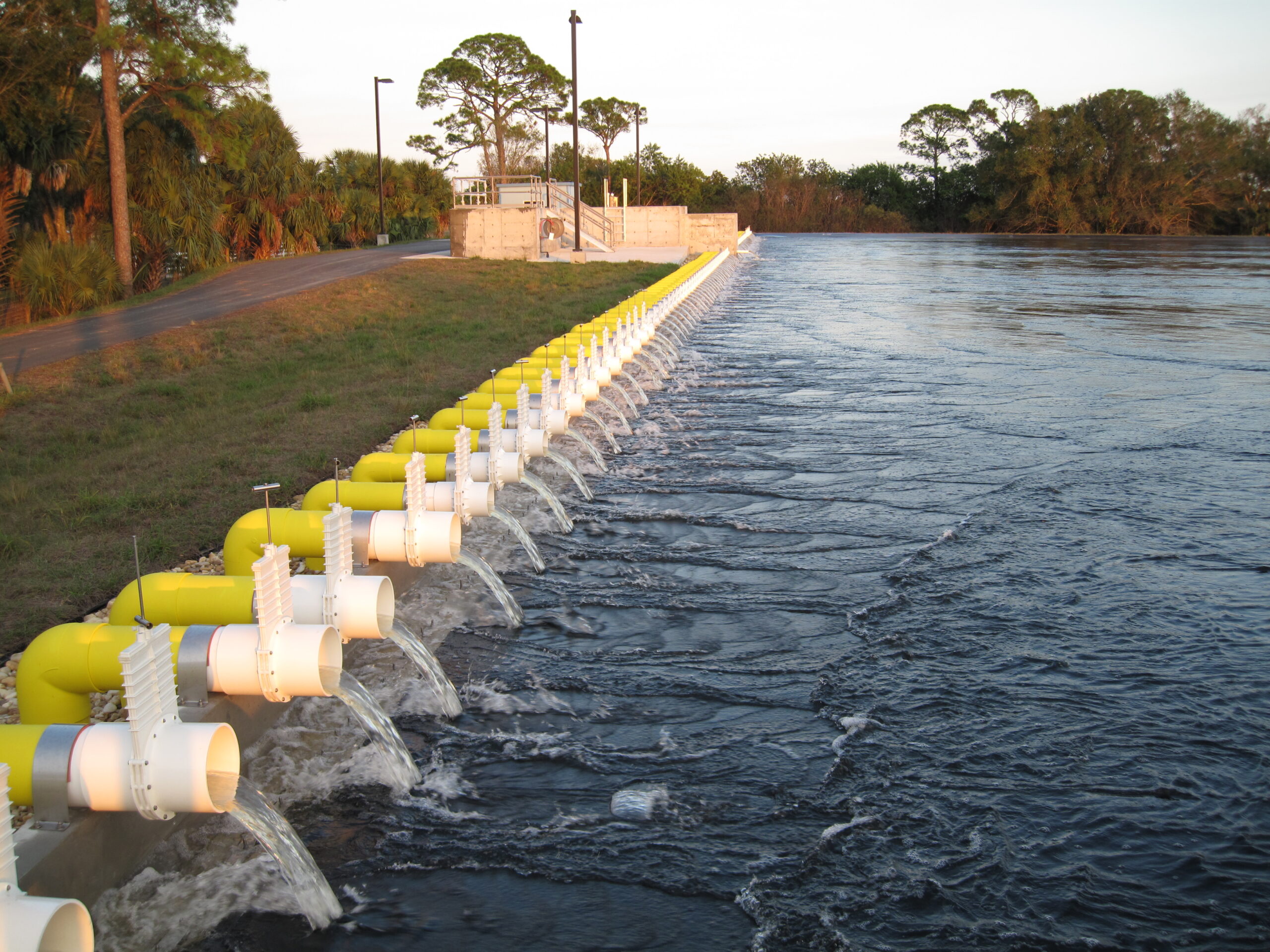
Egret Marsh ATS floway distribution system during operation.

Egret Marsh ATS solids recovery basins.
View Egret Marsh ATS photo gallery
Additional facility photographs are available in HydroMentia’s Facebook photo archive. Facebook may require visitors to sign in to view the complete gallery.
Reports and Publications
HydroMentia’s 2011 Egret Marsh Stormwater Park 319(h) Quarter 4 Final Report summarizes first-year monitoring, nutrient removal performance, algal turf production, harvesting, biomass recovery, pond/wetland polishing, water quality dynamics, and design recommendations for the Egret Marsh Stormwater Park ATS treatment train.
Additional reports and publications related to Algal Turf Scrubber technology and facility-scale applications are available in HydroMentia’s ATS Library.
Related Projects
Related HydroMentia ATS facilities and demonstrations include Osprey Marsh ATS, Egret Marsh Pilot ATS, S-154 ATS, and other full-scale and pilot-scale systems.